Can AI negotiate with customers? What a Journal of Marketing Research study found
An AI trained to bargain hard while acting human out-earned people and passed for human more often than real humans did. Yet everyone who negotiated with a bot felt worse about the relationship. What that means for AI in sales and procurement.
An AI bargainer earned 39% of the pie against 33% for humans and seemed more human than people, yet every bot hurt how people felt about the deal.
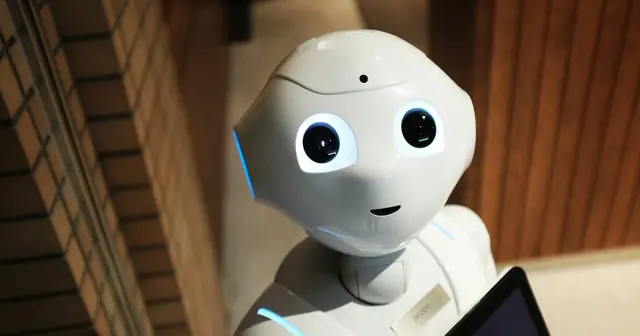
Bargaining is part strategy, part bluff. Photo: Michał Parzuchowski on Unsplash.
The short answer
It can win the deal, but at a cost. In 15,285 bargaining games with 1,019 people, an AI trained to maximise its earnings while behaving like a human earned more than human negotiators and was judged more human than real people. A purely rational bot did worse, because people learned to exploit it. But every bot, however good, left people feeling worse about the negotiation and the relationship than bargaining with a person did, even when they thought the bot was human.
Key takeaways
The best bot kept 39% of the pie per game, against 33% for people in the same role, and was rated more human than real people (4.11 against 3.40 out of 7).
A purely profit-maximising bot was exploited. People learned that it caved near the deadline; it earned only 32%, while its opponents earned 34% instead of 22% against a human-like bot.
Every bot lowered how people felt about the relationship: 3.21 to 3.90 out of 7, against 4.95 after negotiating with a person.
Telling people they faced a bot ("BargainBot") made no difference to how satisfied they felt, but it made them push the rational bot harder.
What the researchers did
AI already negotiates for companies. Walmart uses AI agents to agree terms with suppliers, start-ups sell bots
for sales, procurement and salary talks, and AI agents handle the first rounds of brand deals for influencers.
Most are judged on the money they bring in. Sumon Chaudhuri (WU Vienna) and Arnaud De Bruyn (ESSEC) asked what
happens to the person on the other side.
They trained three bots on 6,432 recorded games of a fast bargaining task, in which two players have ten seconds
to agree how to split a sum of $1 to $6 and only the bot knows the true amount, much as a seller knows its costs
better than a buyer. A human-like bot copied people's behaviour, quirks included. An efficient bot learned to
maximise its earnings. A "superhuman" bot was trained to earn as much as possible while a second AI, acting as a
judge, penalised anything that did not look human. Then 1,019 people played 20 games each against a bot or
another person, with the bot shown either as a person or as "BargainBot".
Experiment
1,019 adults on Prolific, 20 incentivised games each; 15,285 games analysed after practice rounds
Conditions
Human-like, superhuman (three settings) or efficient bot, each shown with a human or a robot avatar, plus human-versus-human games
Measures
Agreements and earnings, a Turing test (bot or human?), and feelings about the outcome, oneself, the process and the relationship
Training data
6,432 games played by 110 students in an earlier study (Camerer, Nave and Smith, 2019)
What they found
The superhuman bot was the best negotiator. Shown as a person, it kept 39% of the pie per game, counting deals that
fell through, against 33% for people in the same role and 36% for the bot that simply copied humans. It also
reached more agreements than the copycat bot (67% against 58%), so its opponents earned more too.
The efficient bot, which looked best in simulations, disappointed. It made rapid-fire offers, replied in a
fraction of a second and reliably accepted almost anything as the deadline approached, because any deal beats no
deal. People spotted the pattern and exploited it, earning 34% of the pie against it and leaving it with 32%,
no more than a human would have made. The more rational the bot, the more often players took more than half the
pie, and even more so when told it was a bot.
Share of the pie kept by the informed negotiator per game, including failed deals
Share of the pie kept by the informed negotiator per game, including failed deals
Group
Value (%)
Human negotiator
33
Bot copying humans
36
Superhuman bot
39
Efficient (purely rational) bot
32
Experiment, bots shown with a human avatar and name; the superhuman bot is the middle setting. Table 3 of the article.
More human than human
Players rarely spotted the better bots. Asked whether their counterpart was a bot or a person (1 = definitely a
bot, 7 = definitely human), they rated the superhuman bot 4.11, higher than real human opponents (3.40), while
the efficient bot's mechanical tactics gave it away (2.93).
Its tactics were human but ruthless. It would often open with nothing and wait for the other side to make
offers, and sometimes let the clock run out rather than concede, like a tough human negotiator. "In negotiation,
the first one to talk loses." The authors admit they lose to it regularly, despite knowing how it works.
Was your counterpart a bot or a person? (1 = definitely a bot, 7 = definitely human)
Was your counterpart a bot or a person? (1 = definitely a bot, 7 = definitely human)
Group
Value (out of 7)
Real human
3.4
Bot copying humans
3.61
Superhuman bot
4.11
Efficient bot
2.93
Experiment, bots shown with a human avatar and name.
The relationship cost
Winning the game did not win people over. Every bot, including the ones people thought were human, left them
feeling worse about the outcome, the process and above all the relationship than negotiating with another person.
Feelings about the relationship averaged 4.95 out of 7 after human opponents, but 3.21 to 3.90 after bots.
A human avatar and name did not help: people felt the same whether the bot was presented as a person or as
"BargainBot". The authors suspect an uncanny-valley effect. People build a picture of their counterpart over
repeated rounds and signal their intentions; the bots, trained one game at a time, ignored those signals, which
may feel like talking to someone who never listens. Because such feelings predict how future negotiations go, the
authors warn that AI negotiators could quietly erode customer and supplier relationships.
How people felt about the relationship after negotiating
How people felt about the relationship after negotiating
Group
Value (out of 7)
Human opponent
4.95
Bot copying humans
3.21
Superhuman bot
3.7
Efficient bot
3.9
Experiment, Subjective Value Inventory relationship scale, bots shown with a human avatar and name.
Marketing in 3 steps
Ready. Set. Market.
1
ReadyDecide and prepare
Keep people for relationship deals. Use AI for high-volume, low-stakes, one-off negotiations, and keep human negotiators, or human review, where repeat business and trust matter most.
Measure more than the deal. When piloting AI in sales, procurement or pricing negotiations, track satisfaction, trust and willingness to deal again, not just margin and close rate.
2
SetBuild it
Avoid purely mechanical bargaining logic. Predictable rules, such as conceding near a deadline, invite exploitation. Some human-like variability protected earnings in this study.
Disclose that it is AI. Presenting the bot as a person did not improve how people felt, so there is little to gain from hiding it. Rules such as the EU AI Act's transparency duties also require telling people when they deal with an AI.
3
MarketLaunch and measure
Test with your own counterparts. Run controlled pilots with real customers or suppliers before scaling, and compare outcomes and satisfaction against human negotiators.
Make bots remember. The authors point to memory across rounds as the missing piece: AI that recognises and responds to the other party's signals over time may close the relationship gap.
What to expect
Better deals per negotiation. The best bot earned about 18% to 21% more than people playing the same role.
More agreements. A well-designed bot closed more deals than a bot copying human behaviour (67% against 58%).
Lower satisfaction. Expect counterparts to feel less positive about the relationship after dealing with any bot, by roughly one to almost two points on a 7-point scale.
Learning by counterparts. Over repeated negotiations, people learn and exploit predictable bot tactics, especially once they know it is a bot.
Where it does not work
A simple, low-stakes game. Ten-second bargaining over a few dollars is far from a contract or supplier negotiation; results may differ when stakes are high and talks involve words.
Mismatched training data. The bots learned from US economics students, who were greedier than the general public they played against.
One game at a time. The bots did not remember earlier rounds with the same person, which the authors suspect drives the relationship cost.
No real relationships. Players did not have a lasting business relationship with the bot, so long-term effects are inferred, not measured.
Questions marketers ask
Can AI negotiate better than humans?
In a Journal of Marketing Research experiment, an AI trained to maximise earnings while behaving like a person kept 39% of the pie per game against 33% for humans in the same role, and was judged more human than real people (Chaudhuri and De Bruyn, 2026).
Do people dislike negotiating with AI?
They felt worse about it. After bargaining with any bot, people rated the relationship 3.21 to 3.90 out of 7, against 4.95 after bargaining with a person, even when they believed the bot was human.
Should a company disclose that its negotiator is an AI?
In this study, presenting the bot as a person rather than as "BargainBot" did not improve satisfaction, so hiding it brought no benefit. Disclosure did make people push a rational bot harder, which is a reason to avoid predictable bot tactics.
Why did the most rational AI negotiator perform worse?
Its strategy was predictable: it accepted almost any offer as the deadline neared, because any deal beats none. People learned this and held out, earning 34% of the pie against it and leaving it with 32%.
What is algorithmic anthropomorphization?
Training an AI to behave like a human in its strategy, not just its appearance, while still pursuing its goals. Here, a second AI acted as a judge and penalised the negotiator for behaviour that did not look human.
Also new this week
Journal of Research in Interactive Marketing · 2026
In experiments and a survey with 541 people in retail scenarios, AI that helped shoppers choose products interactively, rather than simply advising them, gave a better experience and reduced resistance to the algorithm. Information, emotional, control and social aspects of the interaction all mattered, and positive emotions softened distrust of advice-only AI. Let customers work with the AI, not just receive its verdict.
Reinhard, P., Li, M. M., Peters, C., Janson, A., & Leimeister, J. M.
Interviews with 41 customer-support employees, managers and AI experts before and after generative AI arrived (2020 to 2024) reveal seven patterns of how the technology changes service work. It starts backstage, in knowledge work, and seeps into customer conversations, both in real time and through new routines of documenting cases and feeding the AI. Plan for the backstage work that makes frontline AI useful.
Source
Chaudhuri, S., & De Bruyn, A. (2026). Bots bargaining with humans: Building AI super-bargainers with algorithmic anthropomorphization. Journal of Marketing Research, 63(2), 234–256. https://doi.org/10.1177/00222437251375323
This brief is written for practitioners from the published article. Open access (CC BY 4.0): free to read at the publisher. Numbers are as reported by the authors; read the article for full methods.
Facing all-White staff, 50% of non-White customers chose a digital kiosk, against 36% with non-White staff. What it means for service design and AI options.
People who read bad reviews before listening paid $17.29 to see a show, against $20.45 for people who read none. The review changes the experience, not just the purchase.
Bruno Schivinski is Associate Professor of Marketing at Gdańsk University of Technology. He studies how consumers engage with brands in digital and social media.