How many sponsored posts is too many for an influencer? What a Journal of Marketing study found
The usual advice is to avoid influencers who post lots of ads. Four studies with Instagram, Twitter and Douyin data say otherwise: engagement is lowest for influencers stuck in the middle, not for the ones who sponsor the most.
Influencers who post mostly ads or almost none get the most engagement; those at around 40–50% sponsored get the least. How to pick influencers by endorsement rate.
Marketing in 3 · Issue 4 · Week of 2 February 2026
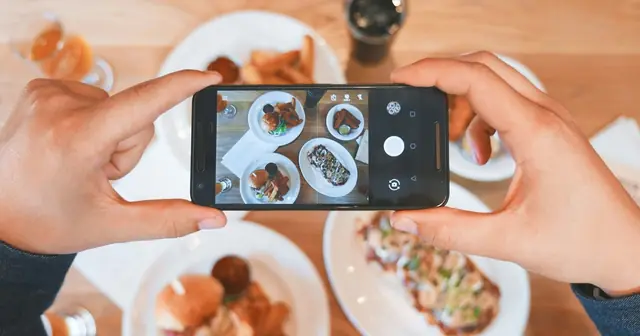
What share of an influencer's posts should be ads? Photo: Vitaly Gariev on Unsplash.
The short answer
There is no single safe number, but the middle is the worst place to be. Across four studies, engagement with an influencer's sponsored posts followed a U-shape: highest for influencers who rarely post ads and for those who post mostly ads, and lowest for those in between, at around 40% to 50% sponsored on Instagram and 52% on Douyin. Mixed feeds make followers suspect manipulation without yet signalling that brands value the influencer.
Key takeaways
When an influencer showed 2 sponsored posts out of 5, only 21.7% of followers shared the next ad, against 41.8% with no prior ads and 44.4% with 4 out of 5.
On Instagram, engagement bottomed out when 39% to 48% of an influencer's posts were sponsored; on Douyin, at 52%.
Influencers who post ads all the time are not a lost cause: those above 73% sponsored on Instagram kept about 90% of the best engagement.
Influencers who often talk about the product type in their own unpaid posts, or who endorse many different brands, are hurt less by a mixed feed.
What the researchers did
A common rule in influencer marketing is to avoid creators whose feeds are full of ads, because followers tire of
sponsored content. Yet many ad-heavy influencers keep strong engagement. Yijing Li, Flora Gu and Fine Leung (Hong
Kong Polytechnic University) and Angela Yi Gao (Lingnan University) set out to measure what actually happens.
They studied the endorsement rate: the share of an influencer's posts that are brand-sponsored. After 12
interviews with influencers and agency staff, they analysed sponsored posts from Australian Instagram influencers
and five years of Douyin (Chinese TikTok) videos, and ran two experiments in which they changed only how many of an
influencer's recent posts were sponsored.
Field data
6,869 sponsored Instagram posts from 4,908 Australian influencers; 533,092 Douyin videos (147,877 sponsored) from 1,000 influencers
Experiments
168 US adults (Twitter cooking influencer) and 208 students in Hong Kong (Instagram fashion influencer, preregistered)
Measures
Likes, comments, reposts, real shares to Instagram stories, and comments that praise or question the influencer
Interviews
12 influencers and agency representatives
What they found
Engagement does not fall steadily as ads pile up. It falls, then rises again. On Instagram, likes and comments on
a sponsored post were lowest when 39% to 48% of the influencer's past posts had been sponsored, and higher on
either side. On Douyin, where the average influencer is far more commercial (61% sponsored against 16% on
Instagram), reposts bottomed out at 52%.
The experiment with real behaviour made the pattern concrete. Students saw five posts from a fashion influencer
with none, two or four sponsored, then the influencer's ad for a duffel bag. To enter a prize draw they had to
share it on their own Instagram story. 41.8% did so when the earlier posts were all organic, and 44.4% when four
of five were sponsored, but only 21.7% when two of five were.
Followers who shared the influencer's sponsored post on their own Instagram story
Followers who shared the influencer's sponsored post on their own Instagram story
Group
Value (%)
No earlier posts sponsored (0 of 5)
41.8
Some earlier posts sponsored (2 of 5)
21.7
Most earlier posts sponsored (4 of 5)
44.4
Study 3, 208 students in Hong Kong, real shares to enter a prize draw for the promoted bag; preregistered.
Why the middle hurts
Two perceptions pull against each other. As the share of ads rises, followers increasingly suspect the
influencer is trying to manipulate them. That suspicion rises steeply at first and then levels off, because a
mostly sponsored feed makes the influencer's commercial role clear and accepted. At the same time, many sponsored
posts signal that brands value the influencer. That benefit is small at first and grows quickly once ads dominate.
In the Twitter experiment, suspicion of manipulation jumped from 4.62 to 5.29 (out of 7) between no ads and two of
five, then rose less, to 5.69. Belief that brands recognise the influencer barely moved at first (4.81 to 4.99),
then jumped to 5.74. The influencer in the middle gets the cost without the benefit. Comments on Douyin showed the
same: remarks praising the influencer's brand deals grew with the endorsement rate, and comments questioning their
motives grew and then flattened.
What followers thought of the influencer, by share of sponsored posts
What followers thought of the influencer, by share of sponsored posts
Group
Value (out of 7)
Suspect manipulation: 0 of 5 sponsored
4.62
Suspect manipulation: 2 of 5 sponsored
5.29
Suspect manipulation: 4 of 5 sponsored
5.69
Valued by brands: 0 of 5 sponsored
4.81
Valued by brands: 2 of 5 sponsored
4.99
Valued by brands: 4 of 5 sponsored
5.74
Study 2, 168 US adults viewing a cooking influencer's posts on Twitter, 1–7 scales.
What makes a mixed feed less risky
Two things from an influencer's history softened the dip on Douyin. The first is organic product mentions: if the
influencer often talks about the same type of product in unpaid posts, a sponsored post for it looks like genuine
interest rather than a paid job. The second is brand consistency: an influencer who has endorsed the same brand
many times gains less from a high endorsement rate, because repeat deals with one brand do not signal broad market
demand.
The money is real. On Douyin, each repost of a sponsored video went with about 22 units sold. For an influencer
on the downward side of the curve, a 5% rise in endorsement rate meant 4.4% fewer reposts, roughly US$2,800 in
lost sales per post; on the upward side it meant 4.9% more reposts, about US$3,200 in extra sales.
Share of sponsored posts at which engagement was lowest
Share of sponsored posts at which engagement was lowest
Group
Value (%)
Instagram, likes
39.3
Instagram, comments
47.5
Douyin, reposts
51.9
Studies 1 and 4, turning points of the U-shaped curves. Average endorsement rate: 16% on Instagram, 61% on Douyin.
Marketing in 3 steps
Ready. Set. Market.
1
ReadyDecide and prepare
Know your platform. Instagram influencers average 16% sponsored, so most sit on the safe low side. On Douyin and similar commerce-heavy platforms the average (61%) sits near the dip, so check each candidate.
Check the endorsement rate. Count the sponsored posts in an influencer's last 50 to 100 posts or 12 months. It is visible to anyone and quick to calculate, and it predicts engagement with your post.
2
SetBuild it
Prefer a clear position. Pick either organic creators with very few ads (under about 5% sponsored) or professional endorsers whose feeds are mostly ads (over about 70% on Instagram). Treat creators in the 40% to 50% range as the weakest bet.
Look for genuine interest and varied partners. Scan the influencer's unpaid posts: if they already talk about products like yours, your sponsored post will look natural, even with a mixed feed. A varied list of past brand partners signals that the market values them; one-brand dependence weakens that signal.
3
MarketLaunch and measure
Record endorsement rates with results. Log each creator's endorsement rate next to the engagement their posts deliver, so your shortlist improves with every campaign.
Advise creators on the move. Influencers moving from organic to sponsored content should grow sponsorships within their own passion area and across several brands, so they pass through the middle quickly.
What to expect
Noticeable differences in engagement. In the sharing experiment, the influencer with a mixed feed got half the shares (21.7% against 41.8% and 44.4%).
Small steps add up. On Douyin, a 5% change in endorsement rate shifted reposts by about 4% to 5%, worth roughly US$2,800 to US$3,200 in sales per sponsored video.
Room at both ends. Influencers under 6% or over 73% sponsored on Instagram kept about 90% of the peak engagement at their end of the curve.
Softer dips for good matches. The penalty for a mixed feed shrank when the influencer already talked about the product type unpaid.
Where it does not work
Engagement, not sales. Most results are likes, comments, reposts and shares. The sales figures are an estimate based on the data provider's average sales per repost.
Two field platforms. The field data come from Australian Instagram and Chinese Douyin influencers. Turning points differ by platform and may differ again on TikTok, YouTube or LinkedIn.
Small numbers in the lab. The experiments showed five posts with zero, two or four sponsored. Real feeds are longer, and "2 out of 4" may not feel like "10 out of 20".
Disclosure rules. Sponsored posts were identified by ad labels and links. Influencers who hide sponsorships were not captured.
Questions marketers ask
How many sponsored posts should an influencer have?
Either very few or most of them. In a Journal of Marketing study, engagement with sponsored posts was highest for influencers with almost no ads and for those whose feeds were mostly ads, and lowest at around 40% to 50% sponsored on Instagram and 52% on Douyin (Li et al., 2026).
Do too many sponsored posts hurt an influencer's engagement?
Not necessarily. Engagement falls as ads increase from zero, but rises again once ads dominate the feed, because followers then see the influencer as a professional endorser whom brands value. Influencers above 73% sponsored on Instagram kept about 90% of the peak engagement.
What is an influencer's endorsement rate?
The share of an influencer's posts that are brand-sponsored. For example, an influencer with 20 sponsored posts out of 100 has an endorsement rate of 20%.
Why do influencers with a mix of ads and organic posts get less engagement?
Their followers start to suspect manipulative intent, but the feed is not yet commercial enough to show that many brands value the influencer. They pay the cost of advertising without the credibility benefit.
How should brands choose influencers using sponsored post history?
Calculate each candidate's endorsement rate, prefer clearly organic creators or clearly professional endorsers, check whether the influencer talks about your product type in unpaid posts, and favour those who have worked with a range of brands.
In two experiments, consumers who understood how algorithms work responded less favourably to an AI influencer's product recommendations and were less willing to buy. The penalty appeared only when the AI influencer was highly interactive, and how human-like it seemed explained the effect. Making a virtual influencer chattier will not win over algorithm-savvy audiences.
Demsar, V., Saldanha, N., Sands, S., & Ferraro, C.
Across three experiments, influencers who amplified a call to cancel a brand damaged trust, credibility and purchase intention more than ordinary peers saying the same thing, while influencers who defended the brand improved evaluations and reduced participation in the boycott. Building relationships with influencers before a crisis gives brands allies when one hits.
This brief is written for practitioners from the published article. Open access (CC BY-NC 4.0): free to read at the publisher. Numbers are as reported by the authors; read the article for full methods.
In the Ferragni and Balocco case, 96% of journalists' tweets were about the influencer. Consumers followed the press, and the brand barely got mentioned.
Handing customers a ready-made post lifted sharing from 0.4% to 2.1% in a real gym campaign, and quietly stopped unhappy customers posting at all. How to use it, and where it gets uncomfortable.
The same airline ad scored lower (4.31 vs 4.82 out of 7) when placed among flood posts. How to pretest social ads in a realistic feed, for free.
Bruno Schivinski is Associate Professor of Marketing at Gdańsk University of Technology. He studies how consumers engage with brands in digital and social media.