Do checkout-free stores make shoppers less generous? What a Journal of Marketing study found
Ask shoppers whether skipping the cashier changes how charitable they feel and most will laugh it off. Nine experiments suggest they’re wrong, and point to some easy fixes.
Shoppers leaving a staff-free store pledged about 40% fewer volunteer hours than those leaving a staffed one. Why it happens, and three fixes.
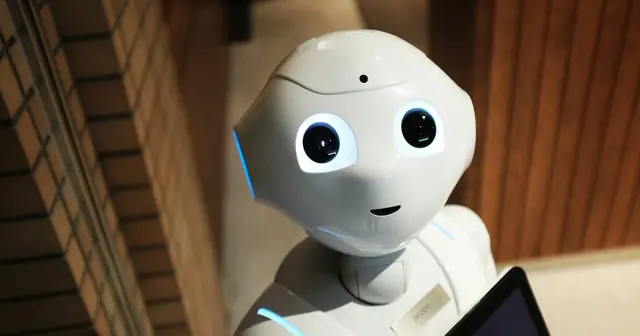
Everything you need, and nobody to talk to. Photo: Eduardo Soares on Unsplash.
The short answer
Yes, a little, and it adds up. Across nine experiments in Singapore, the US, the UK and China, people who had just been in an AI-run store, hotel or restaurant gave less time and money to good causes than people served by staff. Outside two real convenience stores, shoppers from the staff-free one pledged about 40% fewer volunteer hours. The missing human contact left them feeling less connected to others. Shopping with family, explaining how the tech helps customers, and charity appeals that stress what the giver gets back all closed the gap.
Key takeaways
Shoppers didn't see it coming: 76% said a staff-free store would make no difference to their willingness to donate.
Even a humanoid robot receptionist didn't help: 45% agreed to do a longer, more useful hotel survey after meeting the robot, against 61% after meeting a person.
In a real autonomous store, one line saying the technology was there to make shopping easier lifted volunteer pledges from 0.28 to 0.59 hours a month.
A Red Cross appeal framed as "benefits for you and your family" worked as well after an AI store as after a staffed one.
What the researchers did
Cashierless shops, robot hotel desks and smart-shelf supermarkets are spreading fast, and most studies of them
ask one thing: do customers like them? Usually they do. Xiaoyan (Jenny) Liu (Southwestern University of Finance
and Economics), Chi Hoang (ESCP Business School) and Sharon Ng (Nanyang Technological University) asked a
different question: what happens to people after they walk out?
Their focus was everyday kindness: writing a note to an orphan, volunteering a few hours, dropping money in a
charity tin. They ran nine experiments, three of them in real places, comparing an AI-run version of a store,
hotel or restaurant with the same place run by staff. Then they tested what brings generosity back.
Studies
Nine experiments, including field studies at two neighbouring convenience stores and a campus hotel in Singapore
People
About 3,200 participants across four countries
Settings
Grocery and convenience stores, a hotel with a humanoid robot, and a robot-staffed restaurant
Generosity measured by
Letters written, volunteer hours pledged, donation amounts and choosing a longer, more helpful survey
Fewer people, less giving
The neatest test happened on a university campus in Singapore, where one retail brand runs two convenience
stores side by side, with the same layout and the same prices. One has staff; the other has none. Researchers
waited outside both and invited shoppers to sign up as student buddies. People coming out of the staffed shop
offered far more of their time, a gap that held after accounting for age, gender and shopping habits.
Online, the pattern repeated. Americans who imagined a trip to an AI-equipped grocery store wrote shorter
encouraging letters to children supported by a charity than those who imagined a staffed store or simply
recalled their last shop. A follow-up hotel study compared self-service check-in kiosks, a robot and a human
desk: both machine versions led to smaller donations, and the robot was no improvement on the kiosk.
Volunteer hours pledged per month by shoppers leaving each store
Volunteer hours pledged per month by shoppers leaving each store
Group
Value (hours)
Staffed convenience store
2.79
Staff-free convenience store
1.6
Study 1b: 131 shoppers approached outside two neighbouring stores of one brand in Singapore.
Why: the missing small talk
A quick hello at the till seems trivial, but it reminds us we're part of a community. In a UK study, people who
pictured an autonomous grocery store felt far less connected to others (2.83 against 4.64, out of 7),
and were less keen to buy a £1 felt flower made by orphans for charity. That loss of connection, not a sense of
threat from the technology, explained the drop.
Two checks back this up. When participants were first nudged to think about how much they rely on other people,
a robot-run restaurant no longer dented their wish to volunteer for the Salvation Army. And people didn't simply
dislike the automated stores: they often rated them as highly as, or higher than, the staffed ones.
Three ways to win the warmth back
Shop together. Chinese participants who pictured shopping alone in an AI store were less willing to
volunteer with older neighbours (7.08 against 7.69, out of 9). Picture the same trip with family, and
the gap disappeared.
Say who the technology is for. Back at the Singapore stores, some shoppers in the autonomous shop saw a short
message, adapted from the retailer's own press release, saying the system was introduced to make shopping faster
and easier for customers. Their volunteer pledges climbed back to the level of the staffed store. A UK replication
with donations in pounds showed the same thing.
Ask donors what's in it for them. A charity appeal stressing benefits to the whole community lost ground after
an AI store visit (6.79 against 7.39 out of 9). The same first-aid-kit project, pitched as protecting "you and
your family", did not.
Amount people would donate to feed low-income families, by store (UK)
Amount people would donate to feed low-income families, by store (UK)
Group
Value (pounds)
Staffed store
3.05
AI store, no explanation
1.88
AI store, framed as helping customers
2.69
Study 5b: 451 UK adults, donations of £0 to £10 after imagining a shopping trip.
Far from the checkout
The authors studied shops, a hotel and a restaurant, but the same trade-off shows up anywhere a person has been
replaced by a screen. Taking our own step past the data: app-only banks, contactless hotel stays, parcel lockers,
chatbot-only customer service and self-checkout lanes all remove the small human moments this study points to.
That matters for more than charity tins. Brands that run cause campaigns, round-up-at-the-till schemes or
community programmes through automated channels may be asking for generosity at exactly the moment people feel
least connected. And for retailers who sell themselves as "part of the neighbourhood", the human touch may be
doing more work than the efficiency case suggests.
Marketing in 3 steps
Ready. Set. Market.
1
ReadyDecide and prepare
Map the human moments you are removing. List every point where a customer used to talk to a person, from greeting to payment to help, and note which ones automation will take away.
Keep one light human touch. Decide which single contact point stays human, such as a host at the door or a staff member on the floor. The authors point to Booths, a British grocer that brought human cashiers back.
2
SetBuild it
Design for shopping together. Make autonomous formats friendlier to groups and families with shared baskets, group offers or seating, so customers bring their own connection with them.
Explain the tech in customer terms. On signs, apps and receipts, say how the system helps shoppers: open late, no queues, quicker in and out. Avoid language about cost savings or efficiency.
3
MarketLaunch and measure
Rewrite appeals near automated touchpoints. If you run donation prompts, round-ups or charity partnerships in self-service channels, lead with what the giver gains, such as feeling good or protecting their own family.
Measure giving, not just satisfaction. Track charity round-ups, volunteer sign-ups or community participation before and after automating, next to your usual customer metrics.
What to expect
Small dips, many customers. The drop per person was modest, but across thousands of daily visits it can noticeably shrink donations and sign-ups.
Satisfaction surveys will miss it. Customers rated the automated stores just as well, so the cost hides from the usual dashboards.
Charity partners may feel it first. The authors expect collection tins and sign-up desks next to autonomous stores to do worse unless the appeal is reworked.
Fixes are cheap. A message, an appeal tweak or a group offer costs little compared with restaffing a store.
Where it does not work
Mostly imagined shopping trips. Six of the nine studies asked people to picture a store; only the Singapore studies used real ones.
Young, local field samples. The real-store studies involved university students on one campus.
Short-term only. Generosity was measured minutes after the visit; whether the effect lasts, or fades with habit, is unknown.
Mostly intentions. Several measures were stated willingness to give rather than money actually handed over.
Questions marketers ask
Do cashierless or self-checkout stores make people less generous?
Somewhat. That's the conclusion of nine experiments published in the Journal of Marketing. For example, people who imagined shopping in an AI-run grocery store wrote encouraging letters of about 29 words to children in care, against 32 to 34 words for those picturing a staffed store or recalling their last shop (Liu, Hoang and Ng, 2026).
Why would store staffing affect charitable giving?
Brief exchanges with staff make people feel connected to others. Without them, that feeling drops, and a weaker sense of connection makes people less inclined to help.
Would a friendly humanoid robot solve the problem?
No. In the hotel studies, a robot receptionist and a self-service kiosk both led to less helpful behaviour than a human receptionist.
How can retailers keep the efficiency without the social cost?
Encourage shopping with family or friends, explain the technology as something that serves customers, and keep at least one human contact point in the journey.
How should charities fundraise near automated stores?
Lead with what donors gain, such as protection for their own family or the good feeling of giving. In the study, that framing removed the gap; the authors also found appeals inviting people to take the recipient's perspective helped.
In a real store, ads on screens built into shopping carts raised both how much and how often shoppers bought the advertised products, and also lifted sales of other products in the same category. Ads placed centrally on the screen worked about as well as ads matched to the aisle the shopper was in. The cart itself has become a media channel, right where the decision happens.
Older people preferred service robots that spoke their regional dialect rather than the national language, and caregivers would pay about 30% more for a companion robot that could do so. The dialect also raised trust among the general public, but only when the voice sounded humanlike; with a robotic voice it backfired. Local language wins hearts, provided the machine sounds like a person.
Source
Liu, X. J., Hoang, C., & Ng, S. (2026). Automated versus human-operated: Impact of AI-driven autonomous stores on prosocial behavior. Journal of Marketing. https://doi.org/10.1177/00222429261445436
This brief is written for practitioners from the published article. Numbers are as reported by the authors; read the article for full methods.
Facing all-White staff, 50% of non-White customers chose a digital kiosk, against 36% with non-White staff. What it means for service design and AI options.
People who read bad reviews before listening paid $17.29 to see a show, against $20.45 for people who read none. The review changes the experience, not just the purchase.
Bruno Schivinski is Associate Professor of Marketing at Gdańsk University of Technology. He studies how consumers engage with brands in digital and social media.