How do people over 65 use social media to stay connected? What a Journal of Interactive Marketing study found
Lockdown moved much of older people’s social life onto video calls and group chats. Interviews with Britons over 65, and what members of an online community for older people wrote, show how they chose their apps, taught each other and leaned on them through loneliness and loss.
Wilson-Nash et al. find Britons aged 65 to 80 stuck to a few chosen apps and devices in lockdown, and learned to use them by helping each other.
Marketing in 3 · 2023 in research · No. 5 · Paper published 12 February 2023
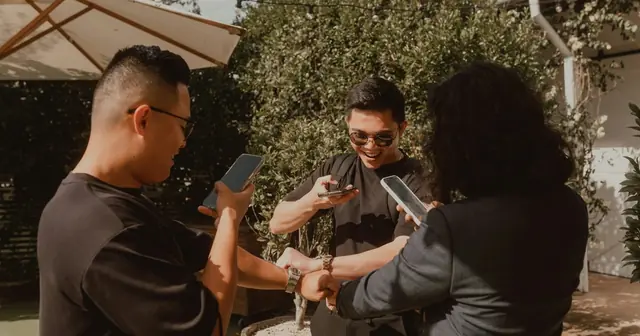
During lockdown, a screen was often the only way to see family, and help to use it came from others. Photo: Georg Pflueger on Unsplash.
The short answer
Selectively, and with help from each other. In 14 video interviews with UK adults aged 65 to 80 and six months of posts on a forum for older people, the researchers found three habits. People chose a few platforms for clear jobs, each on a preferred device, and kept to the friends they already had. They learned by trial and error and from peers. And they used the platforms to offset isolation and grief.
Evidence level
★★★One study
★★★Several studies
★★★Meta-analysis
Key takeaways
Every interviewee reported using social networks more in lockdown to make up for lost face-to-face contact, and 10 of the 14 used them every day.
WhatsApp was the favourite platform of 8 of the 14 interviewees, well ahead of Facebook with 3. Twitter, YouTube, FaceTime and Zoom were named once each.
A forum post from someone unsure what Zoom even was drew 24 replies, with many members offering information and stories of their own Zoom use.
In one circle of about 8 friends that moved its pub evenings onto Zoom, 7 learned to use it. The one who refused had not been seen by the organiser for a year.
What the researchers did
Carolyn Wilson-Nash,
Ismini Pavlopoulou and
Zilin Wang
of the University of Stirling's management school in Scotland looked at what lockdown did to older
people's social lives online. With shops, clubs and pubs closed, contact with family and friends moved largely onto
apps. By 2020, the authors note, 60% of Britons aged 65 to 74 had a social media profile. Yet marketing research
had said little about how this age group uses social networks or what that use does for them: the authors' own
review turned up only nine marketing articles on the subject.
The team worked in two phases. First, they interviewed UK residents over video call about their devices, the
platforms they used, what worried them and how lockdown had changed their social lives. Second, without taking
part, they collected posts from a public online forum for older people. Usernames were replaced and every quote was
paraphrased, so nothing could be searched back to its writer.
Two researchers coded the material and a third checked the resulting themes. Early on, the codes lined up with a
model from the study of ageing called selective optimization with compensation, which describes how people adjust
their goals and resources as they grow older. The analysis then traced how each of its three strategies related to
five parts of social well-being.
Interviewees
14 UK residents aged 65 to 80, seven men and seven women, on video calls lasting 45 to 75 minutes
Who could take part
People aged 65 or over who had lived in the UK for at least 20 years, owned a device and already used social media
Forum data
622 threads and 42,318 posts from 11 of the forum's 52 topics, September 2020 to March 2021, cut to 346 threads and 21,895 posts for analysis
Analysis
Reflexive thematic analysis in NVivo: 307 first codes grouped into nine themes
Lens
Selection, optimization and compensation, a model of ageing well, linked to social acceptance, integration, contribution, actualization and coherence
Choosing a few platforms, a device for each and the same friends
Interviewees did not try every app. They picked platforms for one job each: Facebook to follow other people's lives,
YouTube to look things up, WhatsApp and Zoom for video calls, which had largely taken over from Skype. Mark, 71,
called his daughter's family abroad on WhatsApp because it cost less than a phone call, and a one-off Zoom dinner
with two other couples became a fixture every Wednesday night.
New platforms usually arrived through family. A relative would send a WhatsApp message or a Facebook invitation,
and that was enough to start. Laura, 80, needed her grandson to set things up and explain them. Older people thus
play much the same part as younger users in spreading these services, the authors say.
Each app also tended to live on one device. Maeve, 70, kept Facebook and Skype on her iPad and used her phone only
for WhatsApp. The chart counts the devices interviewees named as their favourite.
Lockdown did not widen anyone's circle. People spoke to the same friends as before, but some shared their time out
differently. Emily, 65, now checked in every 3 or 4 weeks with distant friends she used to speak to a couple of
times a year. Family rituals carried on as well: John, 74, and his relatives, six of them in all, played a board
game over Zoom on Valentine's Day, dressed as its characters.
Favourite devices named by the 14 interviewees (number of people)
Favourite devices named by the 14 interviewees (number of people)
Group
Value ()
Tablet
6
Smartphone
5
Desktop computer
3
Laptop
2
Counted from Table 2 (14 UK interviewees aged 65 to 80). Two people named two devices each, so the counts add to 16.
Learning by trial, error and each other
Many interviewees found the tools easy after years of using computers at work. Others learned by trying. Laura organised
a virtual quiz for her village and, along the way, worked out how to use two screens at once, which she said made
her proud.
Learning was often shared. Edith, 69, helped friends who struggled to get connected, without being in the same room.
On the forum, members answered each other's questions about video calls and set-up. Earlier studies stressed help
from grandchildren; here, the authors conclude, help between peers worked just as well.
Hobbies moved online too. John had gone to the gym three times a week. In lockdown he joined two exercise sessions
on Zoom, monthly art lectures and concerts run by his music society. Two forum members described singing and
playing together with their own microphones switched off, so that nobody worried about wrong notes. Jack, 65, joined
a village WhatsApp group that neighbours set up when lockdown began.
In the authors' framework, this activity feeds social integration, feeling at home in a community, and social
contribution, knowing that one's help is valued. The reverse also appeared. People who could not or would not go
online dropped out of these groups, and the authors warn of a downward cycle of isolation.
Making up for loneliness, loss and the barriers themselves
Lockdown hit hard among people used to meeting face to face. Many interviewees felt isolated and lonely, and John admitted
he was drinking more wine now that his golf club was shut. Social networks filled part of the space, through video
calls, group chats, searching and sharing.
Small features mattered. Laura, a widow who lives alone, valued messages that show as delivered before anyone
replies. Without them, she said, she would feel very isolated.
The forum showed the same use for grief. One member asked when she would be able to listen to classical music again,
three years after her husband died. The authors read requests like this as a search for hope and for a better
understanding of the world, two further elements of social well-being.
The barriers were also something people had to work around. Edith worried about cyberbullying, identity theft and
what would happen if her memory failed, so she rarely posts on Facebook. Jennifer, 79, described a friend of 80 who
had never used any technology, feared that everyone would learn everything about her, and became more and more
isolated through lockdown.
Favourite social platforms named by the 14 interviewees (number of people)
Favourite social platforms named by the 14 interviewees (number of people)
Group
Value ()
WhatsApp
8
Facebook
3
Twitter
1
YouTube
1
FaceTime
1
Zoom
1
Counted from Table 2 (14 UK interviewees aged 65 to 80). One person named both WhatsApp and Facebook, so the counts add to 15.
Advice for the people who build platforms
Most of the authors' advice is for those who design and market social networks. Mainstream platforms
already invest in accessible content, such as scalable fonts, keyboard commands and published accessibility
guidelines. What they lack, the authors argue, is accessible training: help on how to use the service and how to
get past technical problems.
They suggest step-by-step video tutorials made together with older people, and community forums where users support
each other. Sites aimed at older people, such as Gransnet and Silver Surfers, already run technology discussion
boards of this kind. The authors also warn that developers tend to design for people like themselves, which leaves
older users out. In their view, changes made for older people would make a platform more welcoming to every
beginner.
Marketing in 3 steps
Ready. Set. Market.
1
ReadyDecide and prepare
Give each channel one job. List the channels your older customers use and write one job next to each, such as calls with family, news from friends or looking things up. Pick the two that fit your message and leave the rest out of this campaign.
Check which screen they hold. Open your analytics for visitors aged 65 and over and note whether they arrive on a tablet, a phone or a computer. Design and check every page and ad on the top two devices first.
2
SetBuild it
Watch five people set it up. Invite five customers over 65 to install or sign up while you watch, without helping. Write down every point where they stop. Fix the three worst before you spend money on promotion.
Let users teach users. Record short how-to videos with one of those customers explaining each step in their own words. Then open a help group where members answer each other, seed it with three common questions and reply within 24 hours.
3
MarketLaunch and measure
Make the first invite come from family. Give existing users a simple way to invite a parent or grandparent: a ready-written message and one link that installs the app and opens the right screen. Try the link on a tablet and a phone before launch.
Count who drops out, not just who joins. Each month, count older users who were invited but never finished setting up, or who stopped after the first week. Contact ten of them, ask what got in the way and fix the most common reason first.
Found this useful?
Marketing in 3 is free and ad-free, with new issues every Monday and Thursday. A coffee keeps it that way.
Familiar circles, not new ones. Interviewees used social media to stay close to people they already knew, so we would expect offers built on meeting new people to draw less interest in this group.
Video calling decides. Many interviewees chose an app for its video calls, so an offer that makes calling family simple speaks to a feature this group already values.
Helping others matters too. Learners spoke of pride in new skills, and those who helped felt their contribution counted, so a community that answers its own questions can serve both sides.
Some habits may fade. Many routines here stood in for venues that were closed at the time, such as the gym, the pub and the concert hall. Our inference is that some will have faded once those reopened; the study did not follow people afterwards.
Where it does not work
A small, connected sample. Fourteen interviewees, found through social media, email and each other's contacts, all of whom already used social media. People who never went online were heard about only second hand.
One forum. The observation covered a single public forum for older people, and the authors expect introverted users to be underrepresented in both phases.
The UK under lockdown. Every participant lived in the UK during a period of enforced isolation, so other countries and ordinary times remain untested.
Nothing was scored. Social well-being was read from what people said and posted, not measured on a scale, and no group that stayed offline was compared. The size of any benefit is unknown.
A framework from words. The links between the three strategies and social well-being come from the authors' reading of interviews and posts, and have yet to be tested with numbers.
Questions marketers ask
How do older adults use social media?
In this UK study, people between 65 and 80 relied on a small set of platforms, each picked for a purpose such as calling family on video or keeping up with friends' news. In most cases a family member or friend had introduced them to each one (Wilson-Nash et al., 2023).
Did social media help older people during lockdown?
For the people interviewed, it kept friendships, family celebrations, hobbies and clubs going when meeting in person was impossible. The authors tie these benefits to social well-being, from feeling accepted and included to making sense of the world, though well-being was described rather than measured.
What does selective optimization with compensation mean?
A theory of successful ageing from gerontology. People select the goals and relationships that matter most, put their time and energy into making the most of them, and compensate for losses, for instance with new tools. The Stirling team applied it to how older people choose, learn and rely on social networks.
Why do some older people stay offline?
The barriers include a lack of confidence, understanding, support, experience, a connection or money, along with worries about privacy, manipulation, cyberbullying and offensive material. Those who cannot get past them risk falling out of groups that have moved online and becoming more isolated.
What can social media platforms do for older users?
Beyond accessible content such as larger fonts, the authors would like platforms to teach people how to use them: tutorials co-produced with older users, and spaces where members answer each other's questions, like the technology boards on sites for older people.
Should a film studio spend on traditional advertising or on social media? The answer turns on how unsure audiences are about whether a film suits them. Traditional advertising did more for films that were easy to judge in advance, social media marketing helped most where films were harder to judge, and the two channels reinforced each other only for the harder cases. Posts about what the experience feels like did the most for those films, while posts with facts people could check helped the easier ones. How hard a product is to judge before buying should shape both the channel and the post.
Who is keener to buy from peer-to-peer (P2P) providers, ordinary people selling to other consumers? Those who believe the economic system is fair, this research finds. Such beliefs made P2P providers seem more entrepreneurial, which raised interest in buying from them in laboratory and field studies alike, whether the beliefs were measured or induced. Traditional commercial providers gained less from these beliefs. For marketplaces built on individual sellers, an enterprising story about each seller looks worth testing.
Source
Wilson-Nash, C., Pavlopoulou, I., & Wang, Z. (2023). Selecting, Optimizing, and Compensating During Lockdown: How Older Consumers Use Social Networking Services to Improve Social Well-Being. Journal of Interactive Marketing, 58(2-3), 301-320. https://doi.org/10.1177/10949968231155156
This brief is written for practitioners from the published article. Open access (CC BY-NC 4.0): free to read at the publisher. Numbers are as reported by the authors; read the article for full methods.
Replying to a 5-star review by downplaying the praise made 60.8% of people choose that business over one that repeated the compliment. Wording that works, and what to avoid.
Zhang and Zhang find airlines that offered refunds or freebies in public Facebook replies drew more, and harsher, complaints, while apologies added nothing.
Saljoughian et al. find that answering the customer's own point does more for the tone of their next post than speed or cheer, in nearly a million bank tweets.
Bruno Schivinski is Associate Professor of Marketing at Gdańsk University of Technology. He studies how consumers engage with brands in digital and social media.