Does comparing yourself with virtual influencers hurt your wellbeing? What a Psychology & Marketing study found
Lil Miquela and other computer-made influencers post holidays, outfits and friendships that nobody is actually living. Their followers still size themselves up against them. In long interviews, they explained what that does to them, and what they do about it.
Nasr et al. talked to 31 Instagram fans of virtual influencers: comparing with characters they knew were fake stirred envy and shame, but also inspiration.
Marketing in 3 · 2024 in research · No. 44 · Paper published 12 November 2024
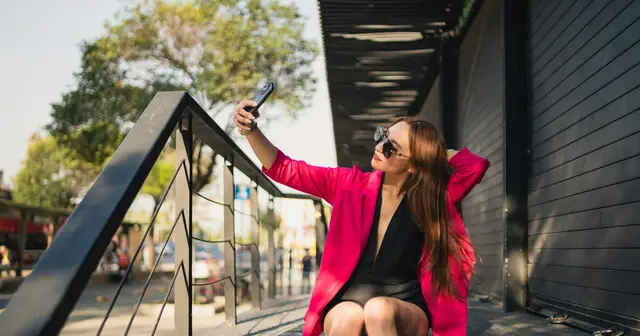
Flawless, almost human and not real at all. Followers compare themselves with faces like this anyway. Photo: Yns Plt on Unsplash.
The short answer
It can, though not only for the worse. Researchers held long interviews with 31 Instagram followers of virtual influencers such as Lil Miquela. Knowing they were looking at computer-made characters did not stop people measuring themselves against them. Some came away envious, angry or ashamed of comparing at all; others picked up style ideas and felt more confident. Those who were hurt talked themselves down, put the phone away or unfollowed.
Evidence level
★★★One study
★★★Several studies
★★★Meta-analysis
Key takeaways
Cartoon looks seemed to soften the sting. Fans of human-looking characters reported envy as well as inspiration, while Noonoouri's 5 followers in the group, who at first denied comparing at all, described only inspiration and admiration when they looked up to her.
A comparison could outlast the scroll by hours: one follower kept comparing for 2 or 3 hours, and another dwelt on it for about an hour afterwards.
Attachment could run deep. One young man checked a virtual influencer's posts 5 or 6 times a day before he caught himself wondering about ordering her as a robot and forming a bond with her.
Comparison can cost reach. Some hurt followers unfollowed, which the authors offer as one reason Lil Miquela lost 114,000 followers in a single year, a figure they take from an industry source.
What the researchers did
Lina I. Nasr, Sahar Mousavi and Nina Michaelidou of Loughborough Business School at Loughborough University in the UK
looked at a side of virtual influencers that marketing research had mostly skipped. These are characters made with
computer graphics or AI and run by agencies or brands, which post, chat with fans and take sponsorship deals much as
human creators do. Most earlier work asked whether they sell. This team asked what they do to the people who follow them.
Their lens was social comparison, the everyday habit of sizing ourselves up against others. Looking up at someone
better off can drag us down or spur us on. Looking down at someone worse off can bring relief, or the fear that their
bad luck could be ours. The question was whether any of that happens when the other person does not exist.
To find out, the team watched some of the busiest virtual influencer accounts on Instagram every day for four months,
among them Lil Miquela, who had 2.6 million followers at the time. The lead researcher sent direct messages to people
who commented regularly and interviewed those who agreed, one at a time over video, about their good and bad
experiences and how they handled them. The transcripts were then coded for recurring themes.
Method
One-to-one video interviews on Microsoft Teams, coded for recurring themes in NVivo
People
31 active followers, 17 women and 14 men, living in 22 countries, 7 of them in the US
Ages
From late teens to early fifties; most were under 30
Recruitment
310 regular commenters approached by direct message; those who agreed were interviewed
Interviews
Between 36 and 106 minutes each, about an hour on average
Characters
Human-looking ones such as Lil Miquela and imma, plus the cartoon-like Noonoouri
Which virtual influencers the interviewees followed (number of people; some followed more than one)
Which virtual influencers the interviewees followed (number of people; some followed more than one)
Group
Value ()
Lil Miquela
26
Noonoouri
5
imma
2
Shudu
2
Kyra
1
Kami
1
Rozy
1
Participant table, interview study with 31 Instagram followers. Totals add to more than 31 because five people followed two or three characters.
Envy and inspiration, often from the same posts
Looking up at a virtual influencer could go two ways. Some followers felt the gap. One young woman listed what she
lacked next to the character: the money, the penthouse, the boyfriend, the holidays somewhere exotic. Another envied
how easily the character seemed to make friends. A few women compared their bodies with the character's, and one who
already struggled with her body image said she felt low after visiting the page. The team did not see body
comparisons among the men.
Other followers came away lifted. Young men and women described copying colour combinations and outfit ideas and
feeling surer of themselves for it. Upbeat posts about self-love and friendship reminded one follower to check in on
her friends. Another heard a message to stop hiding and simply be himself. Followers of Noonoouri admired her for
speaking up about real-world problems.
The two reactions were not separate camps. Some of the same people felt both, envious one moment and inspired the
next, and this mix showed most among the younger interviewees. Younger people also compared more often overall, as
did people with a strong habit of comparing and those with lower self-esteem.
Ages of the interviewees (number of people)
Ages of the interviewees (number of people)
Group
Value ()
18 to 25
16
26 to 35
9
36 to 45
2
46 to 52
4
Same table (31 people). The text gives ages as 19 to 52, but the table lists two people aged 18.
Feelings you only get from someone who isn't real
Some reactions had a twist that only a computer-made character could give them. A woman who had envied the
character's clothes felt ashamed of herself afterwards. The designer wardrobe cost nothing and the life was invented,
yet the effect on her felt entirely real. The authors see two steps here: an automatic comparison first, then a
conscious one that tries to undo it and leaves embarrassment behind.
Anger came up too. One follower said that when he resents the character's great life, he scrolls past her posts
without liking them, a small act of punishment. Another felt awful that such accounts sell a lifestyle as if
anyone could have it.
Comparison also ran downwards. One man saw trolls attack Lil Miquela and defended her in the comments, because it
reminded him of how his friends from minority groups are treated. Older followers worried on behalf of others. A
teacher said his pupils cannot yet tell a real cousin from a star on Instagram, a mother feared what such characters
might put into a child's head, and a model worried that virtual characters would take her work.
How followers protect themselves
Those who felt worse tried to manage it in two ways. The first was changing how they thought about it. One woman
simply told herself that if it is fake, it can be forgotten. Another used techniques she had learned in therapy to
shrug the feeling off.
That did not always work. On bad days the feeling hung on, and one woman said that even after the thought had gone,
the mood stayed and affected how she spoke to people. The authors call it spillover: a low mood leaks out of the
phone and colours ordinary life. One follower worried about people less able to manage these feelings, who could get stuck in a
spiral they never chose.
The second way was changing what they did. Some put the phone down for a while, or went offline altogether and took
themselves out to lunch. Others unfollowed. One man said the account left him overwhelmed, asking himself why he
followed a character living a life she does not even have, while someone behind a computer runs it.
What the authors ask of the people behind the characters
For the agencies and brands that build these characters, the advice is to tell more realistic stories, give them a
more natural appearance, and post regular reminders that the character is not real, nudging followers to focus on
their own lives. The authors also worry about a recent online beauty contest for AI-made models, which they fear
will push the look of future characters even further from anything attainable.
They point beyond marketing too. Parents and teachers can help children understand what these accounts are, and
therapists can help followers who are struggling with the feelings they stir up. Young adults matter most here, since
they are already more prone to anxiety, loneliness and shaky confidence.
Marketing in 3 steps
Ready. Set. Market.
1
ReadyDecide and prepare
Look at who follows the account. Before signing a virtual influencer, open its last 20 posts and go through what people wrote underneath them. Note how many commenters look like teenagers or very young adults. If they make up most of the crowd, plan extra care before you go further.
Say plainly what the character is. Write one short line saying the character is computer-made and who runs it. Put it at the top of the profile and in every paid post, not in a hashtag at the end.
2
SetBuild it
Give the character ordinary days. Brief the creative team to mix everyday moments into the feed. Make every fourth post, at the very least, something ordinary: a lazy Sunday, a missed bus, a dish that went wrong.
Post things followers can use. Fill most posts with ideas people can take away: two colours that work together, an outfit built from basics, a cause and how to help it. Cut posts whose only point is a perfect body or a life nobody can afford.
3
MarketLaunch and measure
Check the comments weekly. For the first eight weeks, go through the comments once a week. Flag any that sound envious, angry or down on themselves, and answer them warmly, reminding people now and then that the character is invented.
Watch for people drifting away. Each month, check unfollows, likes per post and the minutes people spend with the account. If they drop after glamour posts, change the mix before the next campaign.
Found this useful?
Marketing in 3 is free and ad-free, with new issues every Monday and Thursday. A coffee keeps it that way.
A label will not stop the comparison. Many followers knew full well that a computer made these characters and measured themselves against them anyway. Disclose clearly, just don't count on a label to protect anyone on its own.
Trouble shows up as withdrawal. Followers who feel worse tend to step back rather than complain, so falling attention deserves as much notice as the comments.
Practical posts carry the upside. The good feelings came from things followers could use, such as a colour pairing, a nudge to be themselves or a cause to care about. In these interviews, glamour on its own mostly fed envy.
Scrutiny is coming. The authors want regulators to set standards for the makers of virtual influencers and to require clear labels on what kind of character people are following, so brands should expect questions.
Where it does not work
Conversations, not counts. In-depth interviews show what can happen and why. They cannot say how common each reaction is or how strong.
Mostly one character. Most interviewees followed Lil Miquela, so cartoon-like and male characters are thinly covered, and the cartoon findings rest on a handful of people.
Volunteers. Most of the commenters who were approached never took part, and people with strong feelings may have been keener to talk.
Culture left aside. The interviewees lived in many countries, but the authors did not examine whether background changed what they felt.
One platform, one conversation, no children. Everything comes from Instagram and a single interview per person. Minors, the group the authors worry about most, were not included.
Questions marketers ask
What exactly is a virtual influencer?
A computer-generated character with its own social media account, created and run by a digital agency, a brand or an individual. Some look like real people, such as Lil Miquela; others look like cartoons or dolls, such as Noonoouri. According to an industry survey quoted in the paper, 53% of people follow at least one, and 29% have bought something one promoted.
Do people compare themselves with influencers they know are not real?
Yes. Instagram followers interviewed at length described weighing their looks, money, friendships and style against computer-made characters. One said he compared himself less with a virtual character than with human influencers, but still did it (Nasr et al., 2025).
Can following a virtual influencer be good for you?
For some people, yes. Followers described gaining confidence and optimism, getting ideas for what to wear, and admiring a character that took a stand on world events. Others felt worse, so the same account can help one follower and hurt another.
Should brands stop working with virtual influencers?
The authors do not say so. They suggest brands use these characters for positive, purposeful messages, choose them with care, and first learn how their own audience reacts, especially people in a vulnerable position. Brands that talk about wellbeing need to be most careful.
Two field studies and two online experiments compared service robots with three levels of intelligence: robots that only carry out set tasks, robots that reason, and robots that read and respond to feelings. For customers who came for enjoyment, the cleverer robots created a stronger and richer experience, which lifted how they rated the service and their wish to use it again. For customers who just wanted a job done, the results shifted from one setting to the next. A smarter robot is worth most where the visit is meant to be fun.
An analysis of 4,153 GoFundMe campaigns from mid-2021 to late 2022, plus a follow-up experiment, looked at the photos fundraisers upload. The more emotion a face showed, the less Black beneficiaries raised compared with White ones, a gap the authors trace to racial stereotypes about how emotion is expressed. A clear call to action, emotional wording and cues that donors share the beneficiary's race and gender all narrowed it. The photo advice a platform gives its fundraisers is not neutral.
Source
Nasr, L. I., Mousavi, S., & Michaelidou, N. (2025). Self-Comparing With Virtual Influencers: Effects on Followers' Wellbeing. Psychology & Marketing, 42(3), 780-798. https://doi.org/10.1002/mar.22151
This brief is written for practitioners from the published article. Open access (CC BY 4.0): free to read at the publisher. Numbers are as reported by the authors; read the article for full methods.
A meta-analysis of 210 experiments finds virtual influencers win on novelty, lose on credibility, and that how human they look decides which one matters.
Kim and Im find AI influencers who reveal fears and doubts feel more human and less creepy, while a lifelike face adds little, in two tests with 957 US women.
Looi and Kahlor find human influencers outperform virtual ones on Instagram: across 393 accounts, real people drew about 40% more engagement per follower.
Bruno Schivinski is Associate Professor of Marketing at Gdańsk University of Technology. He studies how consumers engage with brands in digital and social media.