What makes people publicly condemn a post or a brand online? What a Psychology & Marketing study found
Feeling offended is only half of it. Across five experiments, the urge to call out an offensive tweet was strongest when people believed their own circle shared the offence and would see them speak up.
Rotman et al. find people condemn offensive posts mostly when they think their own circle is offended too: willingness rose from 3.84 to 4.54 (1 to 7).
Marketing in 3 · 2025 in research · No. 38 · Paper published 16 September 2025
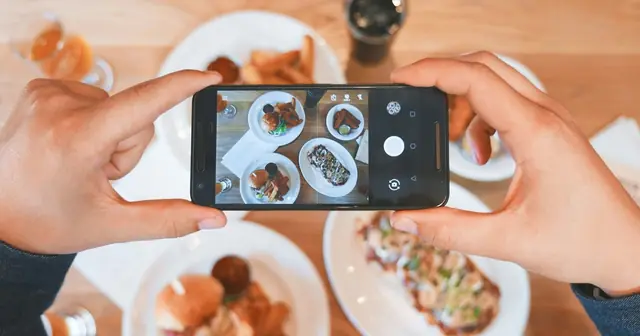
Speaking up comes easier with your own crowd at your back. Photo: Roberto Rendon on Unsplash.
The short answer
Their own offence, plus a crowd they think agrees with them. In five experiments with 1,107 people, anger at an offensive post turned into a wish to condemn it mainly when people believed their friends or followers felt the same, and when the condemnation would be seen. It reached choices too: after a fast-food chain's account posted an insult aimed at Donald Trump, conservative-leaning participants more often took a rival chain's gift card.
Evidence level
★★★One study
★★★Several studies
★★★Meta-analysis
Key takeaways
Willingness to condemn a tweet was about 18% higher, 4.54 against 3.84 (scale 1 to 7), when people thought their friends would take offence as well as themselves.
Anger at a post predicted an urge to call it out only among people who leaned towards thinking their own feed would find it offensive too: above 4.05, where 1 meant strongly disagree and 7 strongly agree.
When a tweet to the candidate blamed for an offensive remark would be private, all four voter groups scored between 1.90 and 2.26 out of 7; the gap between rival camps opened only in public.
In a sixth, hypothetical test, a shirt at half price ($10 instead of $20) still lost ground to a full-price rival after its brand's boss posted an offensive tweet about Barack Obama; only the most conservative participants were unmoved.
What the researchers did
Jeff D. Rotman of Deakin University in Melbourne,
Virginia Weber of Mount Royal University in Canada,
Andrew W. Perkins of Washington State University and
Americus Reed II of the University of Pennsylvania's Wharton School
looked at a question every social media manager meets after a misstep. Why do some offended people post a public
takedown while others scroll on? A common view holds that moral outrage, the anger people feel when a moral line is
crossed, is all it takes. The four suspected that outrage also needs company: a like-minded group that shares
the anger and can watch the person speak up.
They ran five experiments, each built around material many people find offensive: a mocking anagram of a former US
president's name, a notorious joke about AIDS and race, ten tweets drawn from research on hate speech, a news article
about people on welfare, and two tweets posted from a restaurant brand's account. After reading, people rated their
chances of speaking out against it on social media.
Participants
1,107 people across five experiments (295, 195, 201, 220 and 196), plus 181 in a sixth reported in an appendix; recruitment method and location not reported
Material
Offensive tweets, a news article pinned on one of two presidential candidates, and real tweets from a fast-food brand
What changed
Whether people were offended, whether they expected their friends to be, and whether a reply would be public or private
Measured
Self-rated likelihood of condemning the post from their own accounts, three questions on seven-point scales; in the fifth experiment, a real gift-card choice
When
The election experiment ran in October 2016, during the Clinton and Trump campaigns
Outrage needs a crowd that agrees
The first experiment asked people how angry, upset or offended the anagram made them, and whether others in their
own feeds would find it offensive. Strong feelings alone did not lead to a wish to post; that only appeared among
people who also expected their feed to take offence. The second experiment replaced the list of emotions with one
question on personal offence and used the joke about AIDS instead. The pattern held, and neither political views nor
how often people usually post about politics changed it.
The third experiment pulled the two ingredients apart. From the ten tweets, each person picked four: one that
offended them and that they thought would offend their friends, one that offended only them, one they thought only
their friends would mind, and one that bothered nobody. Shared offence drew the strongest urge to condemn. A tweet
that would annoy their friends, but left them unmoved, scored barely above the one nobody minded.
Willingness to condemn a chosen tweet, by who finds it offensive (1 to 7 scale)
Willingness to condemn a chosen tweet, by who finds it offensive (1 to 7 scale)
Group
Value ()
Offends me and my friends
4.54
Offends me, not my friends
3.84
Offends my friends, not me
2.68
Offends nobody
2.47
Study 1c, 201 participants who each picked four tweets from a list of ten; means as reported in the paper (Figure 3).
Why a public post is different
The fourth experiment ran while the US presidential race was at its height. Its 220 participants, 144 planning to
vote for Hillary Clinton and 76 for Donald Trump, read the same article, which pinned remarks calling people on welfare
"deadbeats" on one candidate or the other. The article was adapted from a real one that had linked the remark to
Clinton. People then rated whether they would tweet at that candidate, either privately, so only the candidate
would see it, or publicly, to all their followers.
In private, it made no clear difference whether the remark came from a person's own candidate or the rival. In public, the rival camp grew readier to respond:
Trump supporters when the remark was pinned on Clinton, and Clinton supporters, a marginal result, when it was pinned
on Trump. Even the highest score stayed well under the scale's midpoint. The authors see signalling at work: condemning
an opponent brings a social reward only when your own side can see it.
Readiness to send a public tweet to the candidate quoted, October 2016 (1 to 7 scale)
Readiness to send a public tweet to the candidate quoted, October 2016 (1 to 7 scale)
Group
Value ()
Clinton quote, Clinton supporters
2.0
Clinton quote, Trump supporters
2.92
Trump quote, Clinton supporters
2.37
Trump quote, Trump supporters
1.49
Study 2, 220 people planning to vote for Clinton (144) or Trump (76), public condition only; means from the paper's Supplementary Appendix G (Figure 4).
From posting to buying
The fifth experiment used two real tweets from McDonald's account. One, sent by a hacker, insulted Donald Trump;
participants were told about the hack at the end. The other described new restaurants in the UK. Afterwards each
person chose a $25 gift card from McDonald's, Burger King, Arby's or Wendy's, knowing one participant would really
receive the card they picked.
The insult raised the urge to condemn among all but the most liberal participants (above 2.23, where 1 is very
liberal and 7 very conservative). It also pushed card choices away from McDonald's from slightly left of centre
upwards (above 3.53). Among liberals, choices did not shift in any reliable way. How keen a person was to condemn
the tweet was only loosely tied to their pick, and that link was marginal statistically.
A further experiment, reported in the appendix, flipped the politics and added a cost. People imagined choosing between
pyjama shirts from two invented brands of equal quality after seeing the cheaper brand's chief executive post either the
anagram from the first experiment or a harmless personal tweet. Liberal-leaning participants grew readier to
condemn (below 3.64), and the more someone wanted to condemn, the further they leaned towards the rival shirt. That
chain held on the liberal side only. Across the two studies, each side reacted when the insult targeted a figure from
its own camp.
What a brand can take from this
Three lessons follow, in the authors' view. Speed matters, because a complaint that starts trending tells every
offended reader that people like them feel the same, which feeds the next wave. Size matters too: before reacting, a brand should work
out whether the anger comes from a small, highly active and tight-knit group or from a wide slice of its customers. And when
the backlash targets a deliberate choice, such as a campaign that takes a social stance, the brand has to decide
between apologising and reversing course or standing by the message.
For the second path they cite Nike's campaign with Colin Kaepernick. Some customers left, but the brand stayed with
its stated values and kept speaking to loyal buyers, which the authors prefer to spending heavily on outrage that is
mostly for show. A further thought of ours, untested here: if being seen is what turns anger into a post, an easy private route to complain, such as a direct reply line, may catch some grievances before they go public.
Marketing in 3 steps
Ready. Set. Market.
1
ReadyDecide and prepare
List who could take offence. Before a campaign goes live, write down every group that might find it offensive. Next to each, note where its members talk to each other online, such as a forum, a hashtag or a group chat.
Plan your first reply now. Draft a short holding statement and agree who can sign it off. Decide in advance which kinds of complaint would lead you to apologise and which you would stand behind.
2
SetBuild it
Watch public and private complaints apart. Set your listening tool to split public mentions, replies and quote posts from direct messages and emails. A jump in public posts is your warning sign.
Size the group before you act. Count how many separate accounts are posting and check whether they mostly follow each other. A few hundred linked accounts call for a different reply from thousands of unconnected customers.
3
MarketLaunch and measure
Answer within four hours. Once a complaint starts trending, post your response within four hours. Reply where the complaint is spreading, not only on your own page.
Check sales for eight weeks. Track weekly sales, coupon use and unsubscribes in the groups most likely to be offended. Compare them with the same weeks last year to see whether the anger turned into lost buying.
Found this useful?
Marketing in 3 is free and ad-free, with new issues every Monday and Thursday. A coffee keeps it that way.
Most people hold back. Average willingness to condemn stayed under the midpoint of the seven-point scale in almost every condition; only shared offence pushed it just past halfway.
Being seen raises the stakes. Expect the strongest reaction where people can be watched by others who agree with them, such as public replies, quote posts and community threads.
Sides matter. In every test with a political angle, the reaction came from one camp: the side the post insulted, or the side opposed to the candidate quoted. The other camp barely moved.
A dent in choices, size unknown. The gift-card test shows a real shift, but the paper reports no shares or sales figures, so the cost to a brand cannot be read from it.
Where it does not work
Intentions to post, not posts. Every experiment relied on people's own forecasts of whether they would condemn; nobody's actual feed was observed.
Twitter-era material. All stimuli were tweets, and the voting test dates from 2016; newer platforms and feeds may behave differently.
Unknown samples. How and where participants were recruited is not reported.
One kind of offence. Most stimuli were political or racial insults. Anger at faulty products, prices or poor service was not tested.
A loose link to buying. In the real gift-card test, the urge to condemn only marginally predicted the choice; the clearer link came from a hypothetical shirt choice.
No follow-up. The authors themselves call for interviews and longer tracking to learn how long any effect on buying lasts.
Questions marketers ask
Why do people condemn brands and posts on social media?
Personal offence starts it, but it is seldom sufficient. People were most ready to call out a post in public when they were offended themselves and believed their own circle was offended too (Rotman et al., 2026).
Is online outrage just virtue signalling?
Not entirely, the authors argue. The anger looks genuine, since people showed little interest in condemning posts that did not offend them personally. What shifts is the decision to speak, which depends on having a sympathetic audience that can see it.
Do people who condemn a brand online stop buying from it?
Some do. With a real prize at stake, participants on the side a brand's tweet insulted more often picked a competitor, and in a hypothetical choice a steep discount did not stop an offensive tweet from tilting people towards the rival. How long such choices last was not measured.
When a backlash starts online, what is the best first move?
The authors advise moving fast, since trending posts tell offended people that others agree. They also suggest checking if the critics are a small, vocal community or a broad customer base before choosing to apologise or hold firm.
This review names two forces that feed each other. AI washing is when firms overstate what their AI can do in their marketing; AI booing is the public backlash that follows unmet expectations, ethical worries and opaque systems. Drawing on earlier studies and industry examples, the authors describe a cycle of mistrust and point to transparency, human agency, work with stakeholders and ethical handling of data as the way out. For marketers, the safer claim is the one the product can already back up.
Guests on rental platforms treat the same cabin differently depending on who lists it. Across nine experiments, one in the real world, people felt more ownership of a product rented from a company than from an individual, and acted on it with territorial habits such as moving the furniture around. Host comments on Airbnb's community platform and host interviews link those habits to extra work and damage. A listing that shows the owner's own ties to the place may protect the property as well as sell it.
Source
Rotman, J. D., Weber, V., Perkins, A. W., & Reed, A., II (2026). Beyond Moral Outrage: The Role of the Ingroup in Online Condemnations. Psychology & Marketing, 43(1), 30-46. https://doi.org/10.1002/mar.70040
This brief is written for practitioners from the published article. Open access (CC BY 4.0): free to read at the publisher. Numbers are as reported by the authors; read the article for full methods.
A detailed "this person does not exist" label cut the sense of being manipulated and raised the sense of artificiality. The two effects cancelled out, except among younger viewers.
In the Ferragni and Balocco case, 96% of journalists' tweets were about the influencer. Consumers followed the press, and the brand barely got mentioned.
Handing customers a ready-made post lifted sharing from 0.4% to 2.1% in a real gym campaign, and, less visibly, stopped unhappy customers posting at all. How to use it, and where it gets uncomfortable.
Bruno Schivinski is Associate Professor of Marketing at Gdańsk University of Technology. He studies how consumers engage with brands in digital and social media.