Do reviewers who think they are objective write more persuasive reviews? What a Marketing Letters study found
Some people treat their opinions as plain fact and put any disagreement down to bias. Two online studies show what that outlook does to customer reviews: the writer’s confidence and the reader’s response pull in opposite directions.
Steinmetz and Pronin find reviewers who see their views as objective think their reviews persuade more, while readers find them less likable and convincing.
Marketing in 3 · 2025 in research · No. 47 · Paper published 22 November 2025
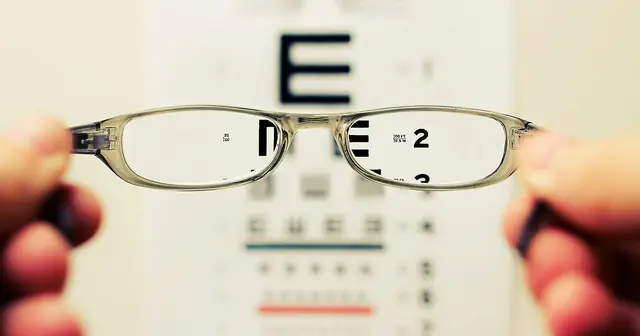
Every opinion arrives with a person attached, at a café table or on a product page. Photo: Shane Rounce on Unsplash.
The short answer
Not in readers' eyes, though the writers think so. In one online study, 162 people each wrote a short recommendation for an Instagram account, and 200 others read ten of them apiece. Writers who saw their own views as plainly objective rated their recommendations as more persuasive, but readers found those writers less likable, and their recommendations less convincing as a result. A second study linked this self-belief to a greater willingness to let others read the review.
Evidence level
★★★One study
★★★Several studies
★★★Meta-analysis
Key takeaways
In the M&M study, a writer's objectivism score accounted for about 18% of the gap between writers in how persuasive they thought their own reviews were.
Writers in the bottom 25% for objectivism wrote warm, fan-like praise, while those in the top 25% wrote like detached and often ironic critics, according to an exploratory comparison made with a language model.
Sharing was the norm: 170 of 191 writers let other participants see their review, and those who believed it would persuade were more likely to agree.
The pattern held for complaints: among 196 people reviewing a recent purchase they disliked, the more objectivist writers again rated their negative reviews as more persuasive.
What the researchers did
Janina Steinmetz of Bayes Business School, City University of London,
and Emily Pronin of Princeton University
started from a habit of mind most people will recognise. Some of us feel we simply see things as they are, so anyone
who disagrees must be short of facts or biased. Psychologists call this the objectivity illusion, and people hold it to
different degrees.
The pair asked what that habit does to online reviews. Most research looks at a review through the reader's eyes.
Here the writers also judged their own work, so the two views could be set side by side.
Everyone first answered an 11-item questionnaire on this outlook, with statements such as "Rational people almost
always agree with me." Writers then produced one short review and said how convincing they thought it was. In the
first study a separate group of readers rated the reviews. In the second, writers decided whether others could see
what they had written. A supplemental study in the paper's appendix switched to complaints.
Study 1
162 people recommended one of four light-hearted Instagram accounts (cartoons, humour, dogs); 200 others each rated ten of those recommendations
Study 2
191 people wrote an honest review of Chocolate M&Ms and chose whether to let other participants read it
Supplemental study
196 people reviewed a product or experience they had recently bought and disliked
Where
Amazon Mechanical Turk, an online platform for paid survey work
Measured
Objectivism on 11 statements (1 to 7), writers' view of their own review, readers' ratings of persuasion and of the writer's likability, willingness to share
Checks
Studies 2 and S1 and the reader side of Study 1 preregistered; data and materials posted publicly
Writers and readers saw the same reviews differently
Among the Instagram recommendations, the link ran in opposite directions depending on who was judging. The higher a
writer's objectivism score, the more persuasive they found their own recommendation and the more readers out of 100 they
expected to win over. Readers moved the other way: the higher the writer's score, the less convincing they found the
recommendation.
These are modest correlations, the kind that show up across many people rather than in every single case. Two dull
explanations were ruled out. Objectivist writers did not enjoy the task more, and neither enjoyment nor fondness for
the chosen account explained the readers' verdict. Length did matter to readers, since longer recommendations
persuaded more, but taking it into account left the pattern unchanged.
Study 1: how closely each rating tracked the writer's objectivism score (correlation, size only)
Study 1: how closely each rating tracked the writer's objectivism score (correlation, size only)
Group
Value ()
Writer: my review persuades (up)
0.32
Writer: readers won, of 100 (up)
0.224
Readers: liking of writer (down)
0.225
Readers: review persuades (down)
0.196
Study 1, 162 writers and 200 readers on MTurk. Up means the rating rose as objectivism rose; down means it fell. All four links are significant.
Why the surest writers fall flat
Liking carried the effect. Readers rated objectivist writers as less likable and relatable, and the drop in
persuasion ran through that lower liking. The authors cite a long line of persuasion research: people size up the
speaker first, then judge the message through that impression.
What might readers have been reacting to? A language model, asked to compare reviews from the lowest and highest
scorers, offers clues. The fans tended to gush ("She's my favorite!"), while the critics mused about whether the
account was "serious or satirical". One group appealed to feeling, the other to judgement, with a hint of superiority
in the second. As the authors note, warmth and humility usually win more liking than detachment, which fits the
readers' ratings.
The keenest to share
The second study asked people to review Chocolate M&Ms honestly, chosen because a cheap, familiar sweet says little
about anyone's taste or expertise. More than 95% of the reviews came out positive anyway. Writers then said whether
their review could be shown to other participants later, and were told this would not affect their pay.
The chain ran through self-belief. More objectivist writers rated their reviews as more persuasive, and writers who
rated their review as persuasive agreed to share it more often. Objectivism had no pull on sharing beyond that route,
and its overall link with sharing was only marginal by the usual statistical standard. Because so few people
declined, the authors want this step tested again.
Complaints follow the same pattern
Almost every review in Studies 1 and 2 was glowing, so the supplemental study asked people to pick a recent purchase
that had disappointed them, a product or an experience, and review it. Objectivist writers again felt their critical
reviews would persuade. They also felt their reviews were more objective, naming what was truly
inferior without bias, and that feeling helped explain their extra confidence.
No readers took part in this study, so how such complaints land with shoppers remains open. The authors treat the
objectivity link as exploratory.
Supplemental study, negative reviews: links with the writer's objectivism score (correlation)
Supplemental study, negative reviews: links with the writer's objectivism score (correlation)
Group
Value ()
Writer: my review persuades
0.161
Writer: my review is objective
0.181
Supplemental Study S1 in the paper's appendix, writers reviewing a purchase they disliked; no readers. Both links rise with objectivism and are significant. The objectivity rating combines two items with an internal consistency of .55.
Two ideas for review requests
The authors offer two suggestions, neither of them tested. First, word review requests so they invite a personal
account. A post-purchase email could ask how the product worked for the buyer and add a reminder that no opinion is
right or wrong. Second, do not lean only on the customers who volunteer. If the eager writers persuade least, a page
built only from their reviews may persuade less than it could, so the authors propose targeted incentives to bring in
a wider range of writers.
One caution is ours rather than the paper's. Rules in many markets require rewarded reviews to be disclosed and
forbid paying only for praise, so any reward should be offered for an honest review at any star rating.
Marketing in 3 steps
Ready. Set. Market.
1
ReadyDecide and prepare
Read your reviews as a stranger would. Pull the last 50 reviews of one best-selling product. Label each one either a personal account ("I used it for...") or a verdict ("This is simply the best, anyone who disagrees is wrong"). Count the verdicts.
Check who is doing the writing. Divide last month's new reviews by last month's orders. If fewer than one buyer in ten leaves a review, your page speaks for a small, self-chosen group.
2
SetBuild it
Rewrite the review request. Open your post-purchase email with a question about how it went for them, such as "What was it like for you?" Add one line saying there are no right or wrong opinions.
Give three simple prompts. Under the review box, offer three short prompts: what you used it for, what surprised you, and who you think it would suit. Keep the star rating separate from the text.
3
MarketLaunch and measure
Ask every buyer, not only volunteers. Send the request to every buyer seven days after delivery, with one reminder a week later. If you add a small thank-you, offer it whether the review is glowing or critical, and label rewarded reviews as such.
Run both requests side by side. Split your buyers into two groups at random. Give one group the old request and the other the new one for a month, then count the reviews from each group and the helpful votes those reviews collect.
Found this useful?
Marketing in 3 is free and ad-free, with new issues every Monday and Thursday. A coffee keeps it that way.
Expect small steps. The links between a writer's outlook and how a review landed were modest, so better wording should move persuasion a little rather than change a page overnight.
New voices on the page. Asking a broader group brings in writers who would never have volunteered. The authors expect their reviews to persuade more.
Detail still counts. Readers rated longer recommendations as more persuasive, so prompts that draw out specifics are likely to help alongside a humbler tone.
Certainty in complaints too. Unhappy customers with the same outlook also feel sure their criticism will land. Whether shoppers agree with them was not tested.
Where it does not work
Paid survey workers. Everyone was recruited on MTurk and wrote for a study, not for a real shop or platform.
Readers in one study only. Only the first study measured how reviews landed, and only for upbeat recommendations of Instagram accounts.
Ratings, not purchases. Readers said how persuasive each review was; nobody's buying or following was tracked.
A measured outlook, not a manipulated one. Objectivism was measured rather than changed, so other differences between writers could play a part.
A thin sharing result. Few people declined, the overall link between objectivism and sharing was marginal, and sharing meant letting other participants see the review, not posting it in public.
Untested advice. The suggested request wording and the use of incentives come from the authors' reasoning, not from a test.
Questions marketers ask
Are confident reviewers more persuasive?
Not when the confidence comes from feeling objectively right. Writers who believed their views were objective expected their reviews to persuade, yet readers liked them less and were less moved by what they wrote (Steinmetz & Pronin, 2026).
What is the objectivity illusion?
The belief that you see the world as it really is, so people who disagree must be uninformed, misinformed or biased. Some people hold it far more strongly than others, and a short questionnaire can measure how strongly, with statements such as "If somebody disagrees with me, it's usually because they are mistaken or biased."
How should I ask customers for reviews?
The authors suggest asking about the customer's own experience and making clear that any honest opinion is welcome, so people write a personal account rather than a ruling. This wording was never tested, so try it against your current request before switching.
Do the customers most eager to review write the best reviews?
Not necessarily. Across the two main studies, writers convinced of their own objectivity were readier to share because they expected to persuade, yet readers found such writers less convincing. A page filled only by volunteers can tilt towards that voice.
Does this apply to negative reviews?
On the writer's side, yes. People reviewing something they disliked showed the same link between their objectivism and their confidence in the review. How readers react to such complaints was not tested.
Also new at the time
Journal of Current Issues & Research in Advertising · 2025
Posts that vanish after a set time are now central to social media. In two experiments, short-lived content helped highly involved viewers remember more, while viewers with little interest recalled more from posts that stayed up. Making the content more fleeting helped the keen viewers further and hurt the casual ones. Vanishing posts suit an audience that is already paying attention; for passing followers, content that stays put does more.
When a service fails and the fix fails too, customers often take the complaint to the company's social media page. Analysing real complaints there, the authors found replies that came quickly at first but resolved things slowly, often lacked empathy and thanks, and followed one script whatever had gone wrong. For failures in the outcome itself, timely replies, proactive effort and careful handling of the back-and-forth eased customers' sadness, anger and disgust. Treat the first reply as the opening of the repair, not the repair itself.
Source
Steinmetz, J., & Pronin, E. (2026). The objectivity illusion and perceptions of online reviews. Marketing Letters, 37(1), Article 2. https://doi.org/10.1007/s11002-025-09805-2
This brief is written for practitioners from the published article. Open access (CC BY 4.0): free to read at the publisher. Numbers are as reported by the authors; read the article for full methods.
People who read bad reviews before listening paid $17.29 to see a show, against $20.45 for people who read none. The review changes the experience, not just the purchase.
After EU roaming fees ended, low-rated restaurants in Rome were twice as likely to close and high-rated ones sold 5.6% more. What reviews do to quality.
Bruno Schivinski is Associate Professor of Marketing at Gdańsk University of Technology. He studies how consumers engage with brands in digital and social media.