Does a VR experience that feels like your own body make people want the real thing? What a Psychology & Marketing study found
Festival visitors put on a headset and paddled a virtual kayak among Antarctic icebergs, some seated and some on their feet. Those who sensed that the virtual body belonged to them found the trip more absorbing and more enjoyable, and sitting down made that link stronger.
Leveau and Camus find VR users with a firmer sense of owning their virtual body felt more immersed and enjoyed the trip more, among 300 festival visitors.
Marketing in 3 · 2023 in research · No. 15 · Paper published 24 April 2023
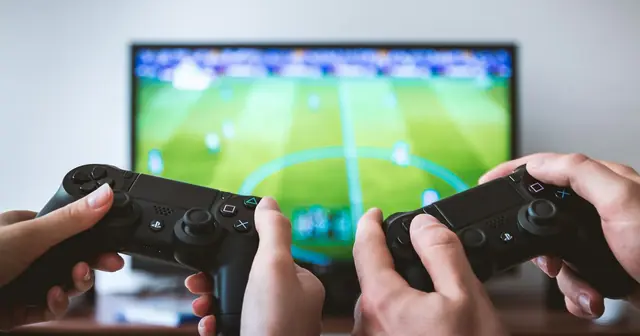
What people see through the lens matters, and so does how the body around it is placed. Photo: James Yarema on Unsplash.
The short answer
Somewhat, and mainly by way of a more absorbing, enjoyable experience. At a festival in Angers, France, 300 visitors kayaked through a virtual Antarctica in a headset, half seated and half standing. The more the virtual body felt like their own, the more immersed they felt and the more they enjoyed it, and both were linked to a stronger wish to visit for real. Sitting strengthened the first two links but not the step to the wish to travel.
Evidence level
★★★One study
★★★Several studies
★★★Meta-analysis
Key takeaways
Feeling that the virtual body was their own explained 31.9% of how much visitors' immersion scores varied, and 22.6% of how much their enjoyment scores varied.
Immersion and enjoyment together accounted for only 7.7% of the differences in wanting to visit Antarctica for real.
2 of the 4 posture comparisons held: sitting, the natural kayaking position, strengthened embodiment's link with immersion and with enjoyment, but neither link to travel plans.
6 of the 13 visitors interviewed afterwards spoke of the virtual trip giving them a desire to go there.
What the researchers did
Pierre-Henry Leveau and
Sandra Camus, both of the Université d'Angers in France,
asked whether the body matters in a virtual reality sales pitch. Brands and tourism boards now build VR
experiences in the hope that a taste of the real thing will make people want it. Their question was
what, inside such an experience, moves someone towards the offer being promoted, and whether the way the user's own
body is placed plays a part.
They ran their test at Geekfest, an event in Angers. Visitors wore a headset and became an explorer paddling a
kayak between icebergs, looking at wildlife and landscapes along the way. A random half did it sitting down, which
is how people really kayak, and could sit in an inflatable kayak for comfort. The other half stood up, a far less
natural position for paddling. Everyone then filled in a questionnaire, and a smaller group was interviewed about
what would lead them to choose a destination after a virtual visit.
Participants
300 festival visitors old enough to travel and pay for a trip themselves; 150 seated and 150 standing, assigned at random
Experience
National Geographic Explore VR on a Meta Quest 2 headset: about 10 minutes kayaking through Antarctica, seen in the first person
Measured
Embodiment (8 statements), immersion (5) and enjoyment (9) on 7-point agreement scales, plus one statement on wanting to visit for real
Method
Partial least squares structural equation modelling, with a multigroup comparison of seated and standing users
Interviews
13 participants, 30 minutes each, coded by hand
What the four measures capture
Embodiment is the sense that the virtual body is yours. The scale covered two sides of it. Agency is the sense that
you are causing and steering the virtual body's movements, and that they keep time with your own. Ownership is the
sense that its arms and legs belong to you. Users looked out through the avatar's eyes and never saw their virtual
body, so a third side, seeing yourself from outside, was left out.
Immersion here means mental absorption: losing track of the room around you and of what came before or after. The
authors distinguish it from presence, which can arise with little effort; absorption takes concentration and grows
as the activity goes on. Enjoyment came from a scale first built for sport and physical exercise, a fair fit for a trip
made entirely by paddle. The outcome was one statement about wanting to discover and visit the destination for real.
Feeling embodied went with deeper immersion and more enjoyment
All five links in the main model held. The two strongest started from embodiment. Its link
with immersion counted as a strong effect by the conventions the paper follows (effect size 0.468), and its
link with enjoyment as a moderate one (0.291).
Immersion and enjoyment also moved together in both directions: people who were more absorbed tended to enjoy the
trip more, and those enjoying it more tended to be more absorbed. Earlier work mostly asked which of the two comes
first. The authors treat the two-way link as a finding in its own right and advise designers to plan for both
feelings at once.
Strength of each link in the model (path coefficient, 0 = no link)
Strength of each link in the model (path coefficient, 0 = no link)
Group
Value ()
Embodiment to immersion
0.565
Embodiment to enjoyment
0.475
Immersion and enjoyment, two-way
0.262
Immersion to visit wish
0.161
Enjoyment to visit wish
0.162
Quantitative study, 300 festival visitors, partial least squares results in Table 4; all five links significant at p < 0.05.
A smaller step to the real trip
Immersion and enjoyment each had a positive, significant link with wanting to go to Antarctica, and the two links
were almost exactly the same size. Both were much weaker than the links from embodiment, with small effect sizes of
0.022 each.
In the authors' interpretation, the results form a chain that runs from embodiment through immersion and enjoyment
to the wish to visit. The paper reports each link separately, not one estimate for the whole chain. Their wider conclusion is
that a virtual consumption experience works on thoughts, feelings and intentions only when people live it as close
to real.
Sitting strengthened the experience, not the travel plans
To test posture, the researchers estimated the model separately for seated and standing users and compared the two,
resampling the data 5,000 times. Sitting made two links stronger, from embodiment to immersion and from embodiment to
enjoyment. Put simply, for people in the natural kayaking position, a sense of embodiment turned into more
absorption and more enjoyment than it did for those on their feet.
Further along, posture made no reliable difference. For the link from enjoyment to the travel wish, the seated
estimate looked far larger than the standing one, but the difference was not significant. For the link from
immersion, the two groups were close. The authors call this not fully consistent with earlier claims that a natural
posture lifts intentions directly, and ask for more work on when it does.
Each link for seated and standing users (path coefficient, 0 = no link)
Each link for seated and standing users (path coefficient, 0 = no link)
Group
Value ()
Embodiment to immersion, seated
0.647
Embodiment to immersion, standing
0.421
Embodiment to enjoyment, seated
0.612
Embodiment to enjoyment, standing
0.332
Immersion to visit wish, seated
0.117
Immersion to visit wish, standing
0.072
Enjoyment to visit wish, seated
0.392
Enjoyment to visit wish, standing
0.09
Quantitative study, 150 seated and 150 standing users, multigroup analysis with 5,000 resamples (Table 5). Seated and standing differ significantly for the two embodiment links only (p = 0.016 and p < 0.001), not for visit wish (p = 0.830 and p = 0.118).
What the interviews added
The interviewees saw the virtual trip as a way to picture a place before travelling and to plan the visits they
would make there. One called it a foretaste. Several said they felt like the main actor in the scene, and one
thought the format sells harder because it makes people curious. Another described it as a possible extra channel,
used in the way they would usually buy a book. On our reading, that places the headset beside existing channels
rather than in their place.
The authors' advice
Design for the body. The authors want developers to let users move, play and interact physically so that they feel
embodied, and to favour applications built to feel close to a real experience. In their view a natural body
position may be enough on its own to make the effects hold. Tourism firms, they suggest, should promote both the
realism of what visitors will see and the fact that it can be enjoyed from a comfortable position.
They also urge public authorities to write rules for experiences inside virtual worlds, which they describe as
having none. A bad experience, they warn, could turn customers off VR and damage the image of whichever brand
offered it.
Marketing in 3 steps
Ready. Set. Market.
1
ReadyDecide and prepare
Copy the posture of the real activity. Write down how a customer's body is placed when they use what you sell for real: seated in a boat, standing at a counter, walking a trail. Set up the VR demo so people take that same position from the first second.
Choose doing over watching. Pick a VR experience in which people move to make things happen, such as paddling, reaching or turning to follow an animal. Try three options yourself and keep the one where your movements feel most like the real ones.
2
SetBuild it
Add a simple prop. Give people something that matches the real setting: a low seat for a kayak, a stool at bar height, a rail to lean on. Try it with five colleagues and adjust until each one settles in within a minute.
Screen off the headset corner. Put the headset in a screened corner with closed headphones, so passers-by cannot crowd round. Keep each session to about 10 minutes so the queue keeps moving.
3
MarketLaunch and measure
Ask four questions at the exit. As people hand back the headset, ask them to give each of four statements a mark between 1 and 7: this body felt like mine, I forgot where I was, I enjoyed it, I want to do this for real. Keep the answers from every session.
Count real follow-ups for 30 days. Give each headset user a booking code, and give people who skipped the headset a different one. Over the next 30 days, compare how many from each group use their code.
Found this useful?
Marketing in 3 is free and ad-free, with new issues every Monday and Thursday. A coffee keeps it that way.
Feelings move first. Embodiment's clearest effects were on how absorbing and enjoyable the trip felt, and the wish to travel followed only weakly from those feelings.
Posture is an easy change to test. On our reading, a seat or a simple prop is among the cheapest adjustments a stand can make, and here sitting strengthened how far embodiment lifted absorption and enjoyment.
A start, not a sale. The authors stress that a trip still needs comparison, planning and a budget, so treat a VR stand as a way to open interest rather than to close bookings.
Where it does not work
One place, one app, one event. A single kayak trip through Antarctica at one festival in Angers; other destinations, products or settings may give different results.
No group without VR. Everyone wore a headset, so there is no telling from this test whether VR does better than a video, a brochure or a website.
A busy setting. Headphones did not fully cut people off from the festival around them, and being watched by passers-by may have changed how they behaved. A laboratory replication is the authors' proposed remedy.
Wishes, not bookings. Intent to visit was a single questionnaire item, and nobody's later travel was tracked.
Self-reports and few senses. Immersion and enjoyment were self-reported, with no physiological measures, and no extra cues such as cold air or scent were added.
Questions marketers ask
Can a virtual reality experience make people want to visit a destination?
It can add to the wish. Visitors who found a virtual Antarctic kayak trip absorbing and enjoyable tended to report a stronger wish to go for real, though those feelings accounted for a modest part of that wish (Leveau & Camus, 2023).
What is embodiment in virtual reality?
The sense that a virtual body is your own. It was measured through two parts: agency, feeling that you cause and control the body's movements, and ownership, feeling that its limbs are yours.
Is it better to do a VR experience sitting or standing?
Match the real activity. In a virtual kayak trip, people who sat, as paddlers do, turned their sense of embodiment into more absorption and enjoyment than people who stood. Posture did not reliably change how those feelings connected with travel plans.
How does immersion differ from presence in VR?
Presence means feeling you are somewhere, which can come from the senses alone without much effort. Immersion, as used in this research, is mental absorption that takes effort and deepens over time, until people stop noticing their surroundings.
Does VR tourism marketing lead to bookings?
Not directly. The outcome was a statement of intent, and, as the authors caution, an expensive, complex journey involves comparing, planning and budgeting long after the headset comes off.
Why do some influencer posts lead to purchases? A survey of 311 followers found that feeling inspired by an influencer's advertising, together with the imagined personal connection followers feel with that influencer, mattered most to the purchases they reported. How inspired people felt varied with how often ads appeared in the influencer's feed and with how well followers recognised persuasion attempts. When picking creators, the share of paid posts in a feed deserves a look alongside the follower count.
Employment platforms let recruiters put a candidate's name and photograph into a job ad. Three online experiments found that these personalised ads made the employer more attractive, because readers felt treated with consideration. That feeling also reduced resistance to the ad and raised intentions to click and to apply, and for some kinds of personalisation a reader's wish to feel unique made the effect stronger. A name in an ad helps when it signals care for the reader.
Source
Leveau, P.-H., & Camus, S. (2023). Embodiment, immersion, and enjoyment in virtual reality marketing experiences. Psychology & Marketing, 40(7), 1329-1343. https://doi.org/10.1002/mar.21822
This brief is written for practitioners from the published article. Open access (CC BY 4.0): free to read at the publisher. Numbers are as reported by the authors; read the article for full methods.
Ding and Kyung find a loading spinner at a moderate pace makes waits feel shorter than a blank screen or a fast spinner, and keeps more people on the page.
Zagni et al. read 730 player posts and ran 12 interviews: in-game ads were welcomed when they fit the game world or helped play, resented when they stopped it.
Khan et al. coded 5,565 luxury TikTok posts and tested three videos: showing how products are made raised openness without costing exclusivity.
Bruno Schivinski is Associate Professor of Marketing at Gdańsk University of Technology. He studies how consumers engage with brands in digital and social media.