Does generative AI make ad people more creative? What a Journal of Advertising Research experiment with 98 agency professionals found
Agencies are handing creative teams AI tools and hoping for better work. An experiment inside a large agency shows what changed when copywriters, strategists and account people wrote taglines with and without it.
Milano et al. tested 98 advertising professionals: generative AI doubled the number of tagline ideas, but only after prompt training, and quality stayed flat.
Marketing in 3 · Issue 42 · Week of 26 October 2026
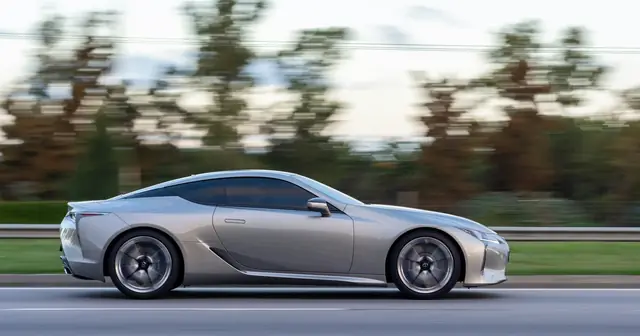
Plenty of ideas on the wall. Picking the right one is the harder part. Photo: Jakub Żerdzicki on Unsplash.
The short answer
Not on its own. Agency staff who used an AI chatbot after a short prompt-writing lesson came up with about twice as many tagline ideas as colleagues working without it. Those who used the same tool with no lesson simply matched the people without AI. But the tagline each person chose as their best was rated just as creative in every group. The AI widened the pool of ideas and did not help pick the winner.
Evidence level
★★★One study
★★★Several studies
★★★Meta-analysis
Key takeaways
With prompt training, people produced about 20 tagline ideas in 25 minutes, against about 10 with no AI or with untrained AI use.
Access to the tool alone changed nothing. The gain appeared only after a short lesson on how to write prompts.
Expert judges rated the chosen taglines the same across all three groups, and the top ten were spread evenly between them.
Most people used the AI to churn out options. Only 2 of 67 asked it to help choose the best one.
They ran the test inside the Brazilian office of a large multinational agency, during working hours. Staff from creative, content,
social media and account teams were split at random into three rooms. One group worked without AI. One used Google's Gemini chatbot
after a quick tour of its basics. The third used the same chatbot after a 20-minute lesson from a Google instructor on writing
structured prompts: give the AI a role, a goal, an audience, a tone and an output format.
Everyone got the same brief: a sportswear brand for older people needs a tagline. In 25 minutes they had to write as many taglines
as they could, pick their best and explain why.
Participants
98 advertising professionals, average age 31, about 11 years in the industry, 51% women
Groups
No AI (31), AI with basic instructions (33), AI after prompt training (34)
Task
A real-style creative brief for a fictional sportswear brand aimed at seniors, 25 minutes
Judging
Five senior advertising professionals, each with 15+ years' experience, rated every chosen tagline blind
Extra data
All prompts the AI groups wrote, plus timing, effort and self-rated creativity
Twice the ideas, but only with training
The trained group wrote an average of about 20 taglines each. The other two groups wrote about 10. Half of the trained group beat
the overall average, against roughly one in five in each of the other rooms. One trained participant produced 100.
The untrained AI group is the surprise. With the same tool at hand, they wrote slightly fewer ideas than the people with no AI at
all. Simply giving a team a chatbot did nothing for output.
Trained prompts were also longer, about 1,370 characters against about 830, and in the trained group longer prompts went with
more ideas. Trained participants were also much more likely to give the AI a job title, such as copywriter or creative director,
and to ask for a set number of options.
Average number of tagline ideas per person in 25 minutes
Average number of tagline ideas per person in 25 minutes
Group
Value ()
No AI
9.84
AI, no training
9.24
AI after prompt training
20.18
98 advertising professionals randomly assigned to three groups (31, 33 and 34 people).
More ideas, same quality
The judges scored each person's chosen tagline for creativity, novelty and fit with the brand. All three groups landed at about 2.5
out of 5, with no meaningful gap. The chatbot itself, asked to judge the same lines, also found no difference.
The best lines were spread across the groups too. Of the ten highest-rated taglines, four came from the room without AI and three
from each AI room. The top two, "Run in favor of time" and "Aging is an extreme sport", came from trained participants. The third,
"There is no finish line", came from someone working without AI.
Two other details stand out. In the trained group, people who spent longer generating ideas ended up with less creative picks.
And only in the no-AI group did people who saw themselves as creative actually produce higher-rated work.
Expert creativity score of each person's chosen tagline (1 to 5)
Expert creativity score of each person's chosen tagline (1 to 5)
Group
Value ()
No AI
2.5
AI, no training
2.49
AI after prompt training
2.52
Mean of five senior judges rating creativity, novelty and appropriateness. Differences are not statistically meaningful.
How people actually used the AI
The team read every prompt. Most were orders, such as "create" or "list", and few treated the AI as a partner. When the output
disappointed, people tended to reply with vague notes like "be more creative" or "improve the text", without saying what better
meant.
Most of all, people used the chatbot to make more options. Few asked it to help with the hard part: comparing ideas, finding their
weak spots or picking a winner.
What the 67 AI users asked the chatbot to do (number of people)
What the 67 AI users asked the chatbot to do (number of people)
Group
Value ()
Generate ideas
54
Write the justification
38
Polish the justification
14
Refine the ideas
9
Pick the best idea
2
Content analysis of all prompts from the two AI groups. People could use the AI for more than one purpose.
Why quality did not move
The authors offer two explanations. Under a deadline, people may settle for the first idea that seems good enough. And a longer
list makes choosing harder, as research on choice overload has long shown. Both happen after the ideas exist, in the human part of the
process.
Their advice to agencies is to train people in prompting, and to stretch AI use into the later stages. That means asking it to score
ideas against clear criteria such as originality, brand fit and clarity, to point out weaknesses and to suggest better versions. It
also means feeding in the team's own references and brand knowledge, so the output does not drift toward the same safe lines
everyone else gets.
Marketing in 3 steps
Ready. Set. Market.
1
ReadyDecide and prepare
Teach a prompt formula first. Before the next brief, spend half an hour with your team on a five-part prompt: who the AI should act as, the goal, the audience, the tone and the format you want back. Have each person write one and share it.
Ask for a fixed number of options. Tell the AI exactly how many lines you want, such as thirty, and the length limit. Specific counts give you a bigger pool to work from than an open request.
2
SetBuild it
Give it your own material. Paste in the brand's positioning, three customer quotes and two references you admire. The more of your thinking it has, the less generic the lines it returns.
Make it judge, not just write. Ask the AI to score your shortlist against four criteria you choose, such as freshness, fit with the brand, relevance to the audience and clarity, and to name the main weakness of each top idea.
3
MarketLaunch and measure
Replace vague feedback with rules. Swap notes like make it better for instructions with limits, such as under six words, starts with a verb, no puns. Change one rule per round so you can see what each one does.
Compare against a human-only round. On your next brief, have half the team start without AI for fifteen minutes. Ask two colleagues to rate the final picks blind from 1 to 5, and keep the AI routine only if its picks score at least as well.
Found this useful?
Marketing in 3 is free and ad-free, with new issues every Monday and Thursday. A coffee keeps it that way.
More options, quickly. Trained staff can fill a long list in minutes, which frees time for the choosing.
No automatic quality boost. The best line still depends on human judgement, so plan for that step.
A short learning curve. One brief lesson made the difference here. No lesson meant no gain.
A selection problem. Bigger lists are harder to sift, so agree on criteria before you start generating.
Where it does not work
One agency, one country. All participants worked at a single Brazilian office, in a market known for strong creative work.
One task under time pressure. A single 25-minute tagline brief may not reflect weeks of iterative agency work.
One AI model. Only the free version of Gemini 2.5 Flash was used, and newer tools may behave differently.
Judges did not fully agree. Agreement between the five judges was moderate, which makes small quality differences hard to detect.
Questions marketers ask
Does generative AI make advertising people more creative?
It made them more productive, not more creative. Trained users produced roughly double the ideas, but the line they chose was rated no better than those of colleagues without AI (Milano, Bagatini, Perin & Barros, 2026).
Is giving staff access to an AI tool enough?
No. In this experiment, people with the chatbot but no training performed no better than people without it.
What did the prompt training cover?
A 20-minute session on structuring prompts: assign a role, state the aim and the audience, set the tone and constraints, and specify the format of the answer.
Where should agencies use AI next?
In the later stages. The authors suggest using it to compare ideas against criteria, spot weaknesses and refine options, which participants almost never did.
Did the chatbot judge the taglines like the experts?
It also found no difference between the groups, though it was more generous overall, scoring the lines close to 4 out of 5 where the human judges gave about 2.5.
Also new this week
Journal of the Academy of Marketing Science · 2026
Across a series of studies, products designed by AI were seen as less sustainable than the same products designed by people, even though AI can make greener design more efficient. The reason is a sense that no one cared: sustainability is tied to love and care, and removing the human from the story removes that signal. Show the people behind the design.
A framework paper arguing that ad metrics were built for human-made, stable campaigns and miss what happens when AI co-creates the ads and mediates the buyer's journey. It sorts which classic measures need rethinking, proposes new ones, and adds outcomes for employees, regulators, investors and society.
Source
Milano, I. C., Bagatini, F. Z., Perin, M. G., & Barros, L. S. G. (2026). Human-GenAI Collaboration in Creative Ideation: A Study with Advertising Professionals. Journal of Advertising Research. https://doi.org/10.1080/00218499.2026.2702092
This brief is written for practitioners from the published article. Numbers are as reported by the authors; read the article for full methods.
Placing ads by both look and topic of the page lifted predicted attention by up to 10%; matching by category or text alone did not. Evidence from 3,531 ads.
Fine-tuned on top-rated ads, generative AI made ad images that beat conventional ads in pretests and lifted Meta click-through by 49%. How to apply it, and when it fails.
A detailed "this person does not exist" label cut the sense of being manipulated and raised the sense of artificiality. The two effects cancelled out, except among younger viewers.
Bruno Schivinski is Associate Professor of Marketing at Gdańsk University of Technology. He studies how consumers engage with brands in digital and social media.